Section: Battery Storage
Tesla Powerwall vs. Enphase vs. FranklinWH: Home Battery Comparison
By ClearWatt Editorial Team · Published July 13, 2026
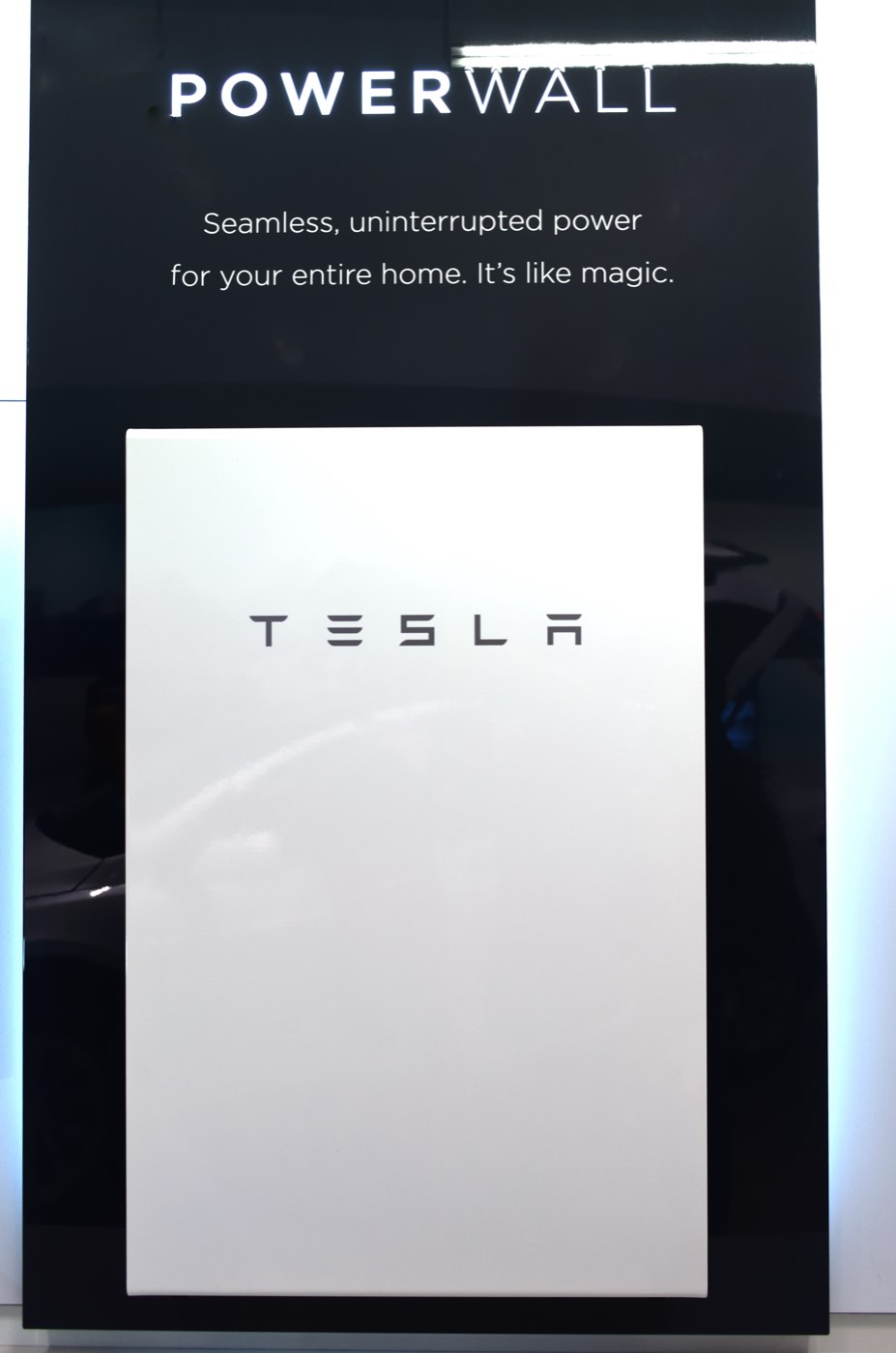
Short answer: Tesla Powerwall 3 offers the most established single-unit option at 13.5 kWh usable capacity and 11.5 kW continuous power, with a 10-year warranty. FranklinWH’s aPower 2 has the largest per-unit capacity at 15 kWh AC and the highest continuous power output. Enphase’s IQ Battery 5P is the smallest and most modular at 5.0 kWh per unit, suited to phased installs or smaller loads. Pricing ranges overlap and installer quotes vary.
How these three batteries compare at a glance
The numbers below come directly from each manufacturer’s published datasheet or warranty document, linked in the Sources section. Prices are the least reliable figures here — they come from secondary sources (mainly EnergySage and aggregated installer data) rather than manufacturer list prices, and vary by region, installer, and system configuration.
| Tesla Powerwall 3 | Enphase IQ Battery 5P | FranklinWH aPower 2 | |
|---|---|---|---|
| Usable capacity (single unit) | 13.5 kWh | 5.0 kWh | 15 kWh AC |
| Continuous power | 11.5 kW AC | 3.84 kW (US model) | 10 kW continuous / 11.5 kVA |
| Peak power | — | — | 15 kW (10 sec), 25 kW (1 sec) |
| Round-trip efficiency | Not stated (sources disagreed) | 90% AC / 96% DC (beginning of life) | 90% (beginning of life) |
| Warranty term | 10 years | 15 years | 15 years or 60 MWh throughput |
| Capacity retention guarantee | 70% at 10 years | >60% through 15 years or 6,000 cycles | ≥70% at end of term (medium confidence) |
| Approx. installed price | $13,000-$16,000 | $5,000-$8,500 per unit; ~$15,000-$17,000 for 2 units | $15,000-$20,000 |
Chart generated from each manufacturer's published datasheet, listed in the comparison table above.
Chemistry note: Tesla’s Powerwall 3 uses lithium iron phosphate (LFP) chemistry, though this is a medium-confidence detail rather than something spelled out prominently in the warranty document. Enphase and FranklinWH’s specific cell chemistries are not detailed here since they weren’t independently verified for this comparison — if chemistry matters to your decision, ask the installer for the specific cell chemistry in writing rather than assuming.
Tesla Powerwall 3: largest installed base, single-unit simplicity
Tesla’s Powerwall 3 warranty documentation lists 13.5 kWh of usable capacity and a 10-year warranty that guarantees at least 70% capacity retention at the end of that term, with unlimited charge cycles for backup, self-consumption, and time-of-use applications. That unlimited-cycle language matters: unlike some warranties that cap coverage at a cycle count, Tesla’s terms for these three use cases aren’t limited by how many times you charge and discharge the battery, only by the 10-year clock and the capacity floor.
Continuous power is rated at 11.5 kW AC, which is enough to run a large portion of a typical home’s simultaneous loads (though not necessarily central air conditioning and an electric range at once). One detail worth being upfront about: published round-trip efficiency figures for the Powerwall 3 vary significantly across sources depending on how and when the measurement was taken, from the high 80s to the high 90s in percentage terms. Because the sources disagree by too wide a margin to state a single reliable number, we’re not citing one here — ask an installer to show you site-specific efficiency data if that number matters to your decision.
On price, two EnergySage articles updated within two months of each other in 2026 give notably different installed costs for the same product: one lists roughly $998 per kWh, about $13,473 installed (updated May 15, 2026), while another cites $15,650 installed (updated July 13, 2026) for what appears to be the same system. That’s a real discrepancy, not a typo we’re smoothing over — treat Tesla Powerwall 3 pricing as somewhere in the $13,000-$16,000 range for one unit, and get a written quote before assuming either figure applies to your home.
Enphase IQ Battery 5P: the modular, small-increment option
The Enphase IQ Battery 5P datasheet lists 5.0 kWh of usable capacity per unit — the smallest of the three batteries compared here by a wide margin. Continuous power for the US model is 3.84 kW, also the lowest of the three. That smaller footprint isn’t necessarily a downside: it makes the 5P a natural fit for homeowners who want to start with modest backup and add units later, or whose essential-circuit loads (refrigerator, wifi, some lighting) don’t require a large single battery.
Enphase publishes some of the more transparent efficiency numbers in the category: 90% AC round-trip efficiency and 96% DC round-trip efficiency at beginning of life, both stated directly on the datasheet rather than requiring outside estimation. The warranty covers 15 years, retaining more than 60% of original capacity, capped at 15 years or 6,000 cycles, whichever comes first — a cycle-based limit the other two products don’t spell out as explicitly.
Because the 5P is sized in smaller increments, per-unit pricing looks cheaper on paper (roughly $5,000-$8,500 per unit, working out to about $1,000-$1,600 per kWh) but a two-unit system needed to approach the capacity of a single Powerwall or aPower 2 runs roughly $15,000-$17,000 — landing in a similar range to the other two once you match capacity. This pricing data is lower confidence than Tesla’s or FranklinWH’s, since it’s aggregated from installer sites rather than a single dated secondary source; treat it as a rough estimate. Enphase’s ecosystem fit also matters here: households already using Enphase microinverters for their solar panels may find the 5P integrates more directly with existing monitoring and hardware, which is worth asking an installer about directly.
FranklinWH aPower 2: largest per-unit capacity, whole-home ambitions
The FranklinWH aPower 2 datasheet (dated December 16, 2025) lists 15 kWh of usable AC capacity per unit — the largest single-unit figure of the three — and supports stacking up to 15 units under one aGate controller for a maximum of 225 kWh. Continuous power output is rated at 10 kW, with 11.5 kVA apparent power, and notably higher short-duration peak ratings than the other two products publish: 15 kW for 10 seconds and 25 kW for 1 second, useful for handling motor start-up loads like well pumps or air conditioning compressors.
Round-trip efficiency is stated at 90% at beginning of life, matching Enphase’s AC figure. The warranty runs 15 years or 60 MWh of aggregate throughput, whichever comes first. Capacity retention is cited at 70% or better at the end of the warranty term, but this figure carries only medium confidence here because it comes from a warranty document that couldn’t be fully cross-verified during this research — ask your installer to confirm the exact retention guarantee in writing before treating it as settled.
Installed pricing for a full aPower 2 system runs roughly $15,000-$20,000, or about $1,177 per kWh, which is a low-to-medium confidence estimate aggregated from installer-facing sources rather than a single authoritative price sheet.
Which one fits your situation
If you want the most capacity from the fewest physical units and value Tesla’s large installed base and dealer network, the Powerwall 3 is the more established path — see our broader breakdown in Home Battery Storage 101 for how batteries fit into a solar system generally. If you’re building out capacity gradually, already run Enphase microinverters, or have relatively modest essential-circuit loads, the IQ Battery 5P’s smaller increments make more sense — though you’ll want to work through how many batteries you’d actually need before assuming one unit is enough. If your priority is maximum capacity and power per unit, with an eye toward scaling to whole-home backup across many units, FranklinWH’s aPower 2 has the highest per-unit numbers in this comparison.
None of these figures settle how long any of these batteries will hold up over years of real use — degradation depends heavily on climate and how the battery is used, which we cover in detail in Solar Battery Lifespan. And if you’re weighing a battery against a standby generator instead of, or alongside, one of these systems, see Battery Backup vs. Generator for a direct cost comparison.
A note on price confidence
We’ve flagged the price ranges above with different confidence levels deliberately. Tesla’s range is anchored to two dated EnergySage articles that disagree with each other by roughly $2,000 for what appears to be the same product — a genuine discrepancy, not resolved here. Enphase’s per-unit price is aggregated from multiple installer sites rather than one source. FranklinWH’s price estimate carries the lowest confidence of the three. In all three cases, a written quote from a licensed installer for your specific home and location is the only reliable number — published price ranges are a starting point for a conversation, not a quote.
Disclaimer: This comparison is for general information only and isn’t a recommendation to purchase any specific product. Specifications, pricing, and warranty terms change; confirm current details directly with the manufacturer or a licensed installer before making a purchasing decision.
Sources
- Tesla, Powerwall Limited Warranty (Powerwall 3) — energylibrary.tesla.com (consulted August 9, 2026)
- EnergySage, “Tesla Powerwall Review” (updated May 15, 2026) — energysage.com (consulted August 9, 2026)
- EnergySage, “Battery Backup Power vs. Generators: Which Is Right for You?” (updated July 13, 2026) — energysage.com (consulted August 9, 2026)
- Enphase, IQ Battery 5P Data Sheet — enphase.com (consulted August 9, 2026)
- FranklinWH, aPower 2 Datasheet (dated December 16, 2025) — franklinwh.com (consulted August 9, 2026)
Frequently asked questions
Which is bigger, Tesla Powerwall 3 or FranklinWH aPower 2?
FranklinWH's aPower 2 has more usable capacity per unit at 15 kWh AC, compared to the Tesla Powerwall 3's 13.5 kWh usable capacity, according to each manufacturer's own datasheet. Tesla's continuous power rating (11.5 kW AC) is lower than FranklinWH's (10 kW continuous, with higher short-duration peaks), so which one wins depends on whether you're comparing stored energy or output power.
Is Enphase IQ Battery 5P too small for whole-home backup?
At 5.0 kWh usable capacity per unit, a single Enphase IQ Battery 5P is smaller than one Tesla Powerwall 3 (13.5 kWh) or one FranklinWH aPower 2 (15 kWh). Enphase's system is designed to be stacked in multiple units, so homeowners needing more capacity typically install two or more 5P units rather than relying on a single unit for whole-home backup.
Which battery has the longest warranty?
Enphase and FranklinWH both publish 15-year warranty terms, longer than Tesla's 10-year term for the Powerwall 3. However, the guarantees differ in structure: Tesla guarantees 70% capacity retention at 10 years with unlimited cycles for backup, self-consumption, and time-of-use use; Enphase guarantees over 60% capacity retention through 15 years or 6,000 cycles, whichever comes first; FranklinWH's documentation cites 70% capacity retention through 15 years or 60 MWh of throughput, though this figure carries lower confidence than the other two.
Which battery is cheapest?
Based on the available pricing data, Enphase's per-unit installed cost (roughly $5,000-$8,500 for one 5P unit) is the lowest entry point, though a comparable-capacity multi-unit Enphase system can cost as much as the other two. Tesla Powerwall 3 runs roughly $13,000-$16,000 installed for one unit, and FranklinWH's aPower 2 system runs roughly $15,000-$20,000. All three price ranges come from secondary sources rather than manufacturer list prices, so treat them as estimates, not quotes.
Written by
ClearWatt Editorial TeamThe ClearWatt Editorial Team researches and writes every guide on this site. We work from primary sources — federal and state agencies (EIA, NREL, DSIRE, IRS), legislative text, utility rate schedules, and manufacturer documentation — rather than summarizing other websites' coverage of the same topic. We are not licensed solar installers, financial advisors, or tax preparers, and nothing published here is a substitute for advice from one. When a figure can't be traced to a specific, current source, we say so and give a range instead of a false-precision number. Articles are dated, and we correct confirmed errors promptly. See our Editorial Policy for the full standard every guide is held to, and About & Methodology for the sources we draw from.