Section: Battery Storage
How Many Batteries Do You Need to Power a House?
By ClearWatt Editorial Team · Published May 28, 2026
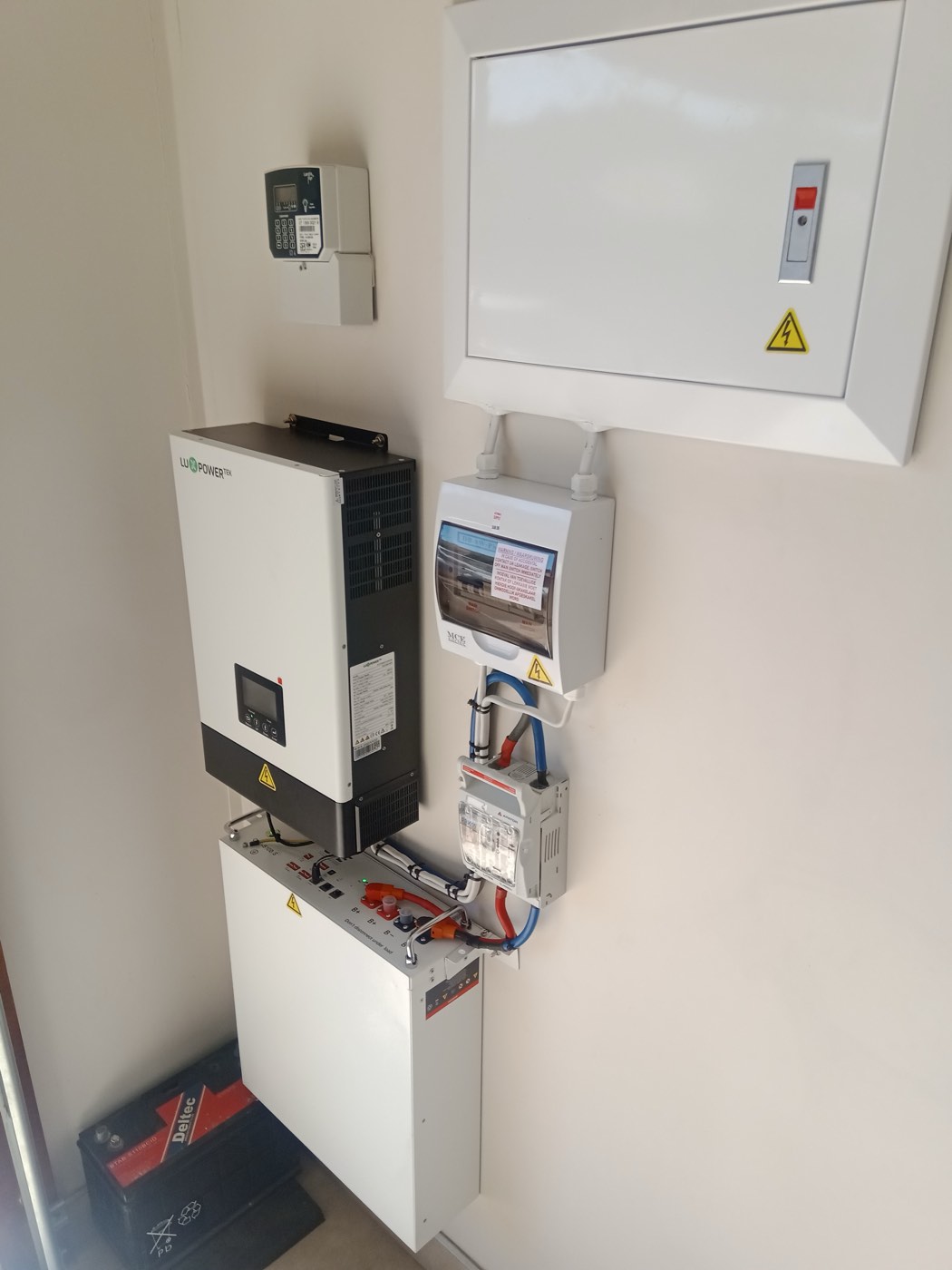
Short answer: Using EIA data, the average U.S. home uses about 29.6 kWh per day. One Tesla Powerwall 3 (13.5 kWh usable) covers roughly 11 hours of backup if you run the whole house at that average rate. A single Enphase IQ Battery 5P (5.0 kWh) covers about 4 hours; a FranklinWH aPower 2 (15 kWh) covers about 12 hours. Backing up only essential circuits instead of the whole house stretches these numbers considerably further.
The real formula, worked out step by step
There’s a genuine, citable formula for this calculation, and it’s worth walking through with real numbers rather than hand-waving toward “it depends.” EnergySage lays it out directly in a worked example using the Tesla Powerwall 3 (updated May 18, 2026):
Hours of backup = (battery usable kWh ÷ average daily home electricity use in kWh) × 24
For the “average daily use” side of the equation, the most reliable figure available is the U.S. Energy Information Administration’s own residential consumption data: average U.S. household electricity use was 10,791 kWh per year in 2022, which works out to about 899 kWh per month, or about 29.6 kWh per day (10,791 ÷ 365).
Plugging a single Tesla Powerwall 3’s 13.5 kWh usable capacity into the formula:
(13.5 ÷ 29.6) × 24 = 10.9 hours
That’s the backup time you’d get from one Powerwall 3 if your home ran at the average U.S. household’s full daily electricity draw — every appliance, every circuit, nothing turned off or rationed. EnergySage’s own version of this calculation, using a slightly different daily-use baseline, arrives at approximately 11 hours, which lines up closely with the EIA-anchored figure above. The small difference comes down to which specific average-use number is plugged in, not a disagreement about the method.
Running the same math for other battery sizes
The formula scales directly with capacity. Holding the EIA’s 29.6 kWh/day average constant:
| Battery | Usable capacity | Backup time (whole-house average use) |
|---|---|---|
| Enphase IQ Battery 5P (1 unit) | 5.0 kWh | ≈ 4.1 hours |
| Tesla Powerwall 3 (1 unit) | 13.5 kWh | ≈ 10.9 hours |
| FranklinWH aPower 2 (1 unit) | 15 kWh | ≈ 12.2 hours |
| Tesla Powerwall 3 (2 units) | 27 kWh | ≈ 21.9 hours |
| FranklinWH aPower 2 (2 units) | 30 kWh | ≈ 24.3 hours |
| Enphase IQ Battery 5P (3 units) | 15 kWh | ≈ 12.2 hours |
Chart generated from the usable-capacity table above using each manufacturer's published capacity figures.
These figures come from each product’s manufacturer datasheet for usable capacity — see our comparison of Tesla Powerwall, Enphase, and FranklinWH for the full spec breakdown — combined with the EIA average-use figure and the EnergySage formula above. They all share the same important caveat: this is backup time for a home running its full average draw, not a home that’s rationing power to essential loads only, which is what most real-world battery backup setups actually do.
Why the “essential circuits” approach changes everything
The whole-house average-use calculation above is useful for understanding the math, but it’s not how most residential battery backup is actually configured. Installers typically wire a battery to back up a defined subset of circuits — commonly the refrigerator, some lighting, internet/wifi equipment, and sometimes a well pump — rather than every circuit in the house. Central air conditioning, electric water heaters, electric ranges, and EV chargers are common examples of loads left off the backed-up circuit list specifically because they draw enough power to drain a battery quickly.
Because essential circuits use meaningfully less power per day than a home’s full average draw, the same battery stretches much further under an essential-circuits configuration than the whole-house math above suggests. We’re not going to put a specific number on “typical essential-circuit kWh per day” here, because no verified figure for that exists in the research behind this article — it depends heavily on which circuits you choose, your appliances, and your household’s habits. What we can say with confidence is the direction of the effect: fewer circuits backed up means lower daily draw, which means more hours of backup from the same battery capacity.
If you’re trying to figure out your own number, the only reliable path is a load calculation from a licensed solar or electrical installer, who can look at your panel, your specific essential circuits, and your actual appliance draw rather than a national average.
It’s also worth separating two different questions that get conflated in casual conversation about battery sizing: “how many hours will this battery run my house” and “how many batteries do I need for my house.” The first is the calculation above — capacity divided by draw, times 24. The second depends on your goal. If the goal is a few hours of bridge power for a short outage, one unit of almost any of the three products compared in this batch of articles is plausible for an essential-circuits setup. If the goal is multi-day, whole-house resilience, the math above shows why that typically requires either several battery units, meaningful daylight solar recharging between outage hours, or both — a single 13.5-15 kWh unit running full household average draw lasts roughly half a day, not several days, which is a useful reality check against marketing language that implies otherwise.
What about NREL’s sizing tools?
The National Renewable Energy Laboratory maintains REopt, a techno-economic optimization tool used to size combined solar-plus-storage systems against a building’s load profile and utility rate structure. It’s a genuinely useful resource for homeowners or installers who want to model a system in more depth than the simple formula above allows. That said, it’s built for full system sizing and financial modeling, not as a quick “how many batteries do I need” worksheet, and no specific whole-home battery-sizing figure from REopt is cited in this article, because none was pulled from the tool for this research. If you want to go deeper than the formula above, REopt is worth exploring directly rather than relying on a secondhand number.
Putting it together: a practical approach
- Start with the EnergySage/EIA-anchored formula above to understand roughly what a given battery’s capacity translates to in backup hours, assuming full-house average use.
- Recognize that number is a ceiling-adjacent estimate for average-use conditions, not a realistic prediction for an essential-circuits setup, which is how most residential backup is actually configured.
- Get a load calculation from a licensed installer for the specific circuits you want backed up — this is the only way to get a number tailored to your home rather than a national average.
- Compare that load calculation against the usable capacity of specific products, like those in our Tesla Powerwall vs. Enphase vs. FranklinWH comparison, to decide how many units you’d actually need.
- If you’re also weighing a generator as an alternative or supplement to battery backup, see our Battery Backup vs. Generator comparison, and if you’re wondering how battery capacity holds up over years of use rather than just a single outage, see Solar Battery Lifespan.
Disclaimer: The figures in this article are illustrative calculations based on national average electricity usage, not a substitute for a home-specific load calculation. Actual backup time depends on your household’s real electricity draw, which circuits you choose to back up, and battery health over time. Consult a licensed installer for a sizing plan specific to your home.
Sources
- U.S. Energy Information Administration, “How much electricity does an American home use?” — eia.gov (consulted August 9, 2026)
- EnergySage, “Tesla Powerwall: How Much of Your Home Can You Run on It, and for How Long?” (updated May 18, 2026) — energysage.com (consulted August 9, 2026)
- Tesla, Powerwall Limited Warranty (Powerwall 3 usable capacity) — energylibrary.tesla.com (consulted August 9, 2026)
- Enphase, IQ Battery 5P Data Sheet — enphase.com (consulted August 9, 2026)
- FranklinWH, aPower 2 Datasheet — franklinwh.com (consulted August 9, 2026)
- National Renewable Energy Laboratory, REopt techno-economic optimization tool — reopt.nrel.gov (consulted August 9, 2026)
Frequently asked questions
How many Tesla Powerwalls do I need to power my whole house?
Using the EIA's average U.S. household usage of about 29.6 kWh per day and a single Tesla Powerwall 3's 13.5 kWh usable capacity, one Powerwall covers roughly 11 hours of backup if you run everything in the house as normal. Two units would roughly double that to around 22 hours, and so on — but this assumes average household usage, not a load calculation specific to your home, so treat it as a rough starting point rather than a sizing plan.
Do I need enough battery capacity to run my whole house, or just some circuits?
Most installers size battery backup around a subset of 'essential circuits' — typically the refrigerator, some lighting, internet/wifi, and sometimes a well pump — rather than the whole house, because essential circuits draw much less power per day than a home's full average usage. This stretches the same battery capacity much further than a whole-home calculation would suggest, though no single verified figure exists for typical essential-circuit daily usage since it varies by household.
What's the formula for calculating battery backup time?
EnergySage uses this formula: (battery usable kWh ÷ average daily home electricity use in kWh) × 24 = hours of backup. For example, a 13.5 kWh battery against 29.6 kWh of daily use works out to (13.5 / 29.6) × 24, or about 10.9 hours, assuming the home runs at its full average draw rather than a reduced essential-circuits load.
Is there an official government calculator for sizing a home battery?
Not a simple one. The U.S. Energy Information Administration publishes average household consumption data, and NREL's REopt tool is a more advanced techno-economic sizing tool for combined solar-plus-storage systems, but it isn't a quick worksheet for estimating battery backup hours. For a specific number, a load calculation from a licensed installer remains the most direct source.
Written by
ClearWatt Editorial TeamThe ClearWatt Editorial Team researches and writes every guide on this site. We work from primary sources — federal and state agencies (EIA, NREL, DSIRE, IRS), legislative text, utility rate schedules, and manufacturer documentation — rather than summarizing other websites' coverage of the same topic. We are not licensed solar installers, financial advisors, or tax preparers, and nothing published here is a substitute for advice from one. When a figure can't be traced to a specific, current source, we say so and give a range instead of a false-precision number. Articles are dated, and we correct confirmed errors promptly. See our Editorial Policy for the full standard every guide is held to, and About & Methodology for the sources we draw from.