Section: Battery Storage
Home Battery Storage 101: Do You Need One With Your Solar Panels?
By ClearWatt Editorial Team · Published July 22, 2026 · Last updated August 9, 2026
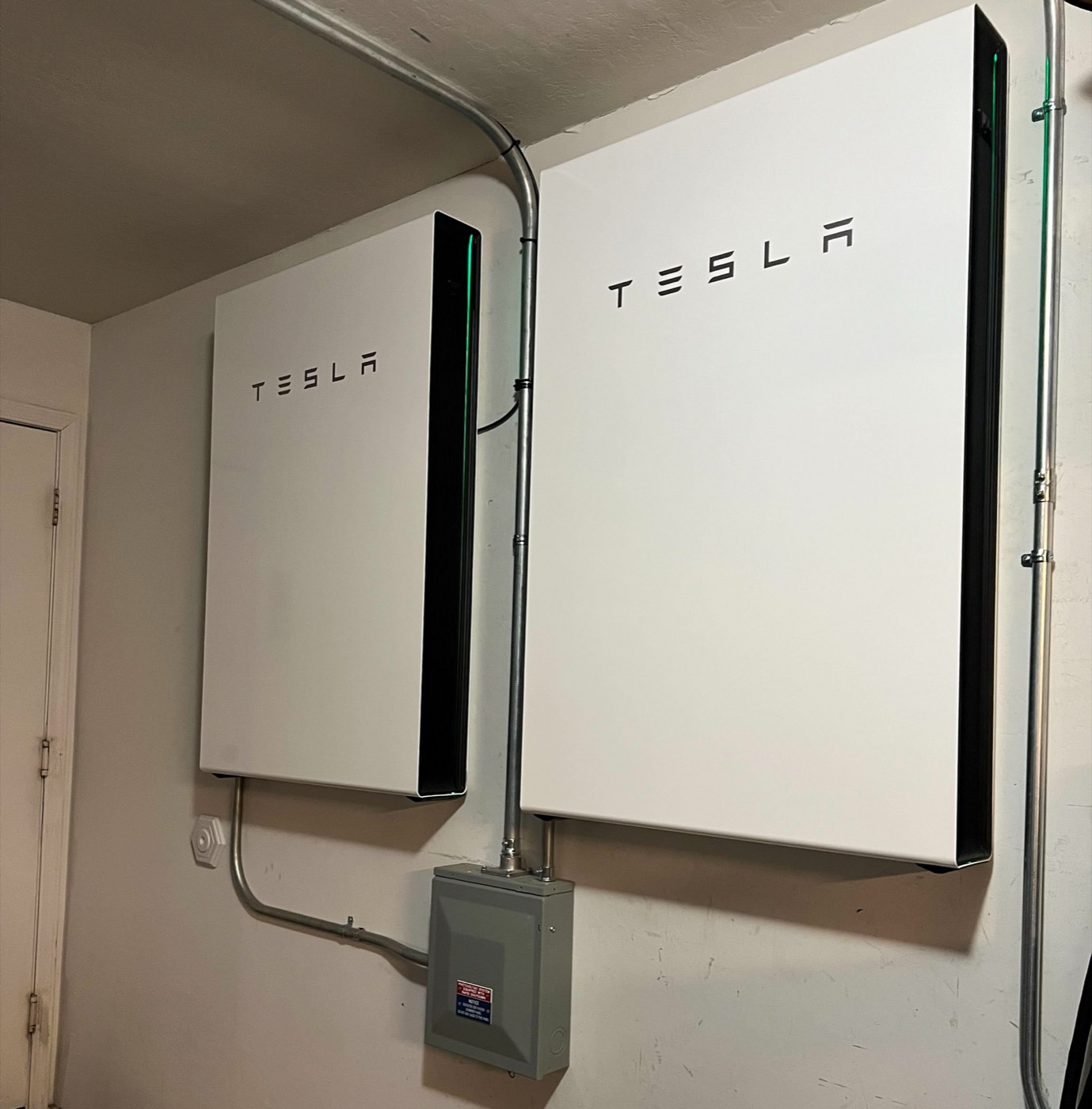
Short answer: A home battery isn’t required to use solar panels, and it isn’t automatically worth it for everyone. It tends to pay off when your utility has cut back net metering credits, charges time-of-use rates, or you experience frequent outages — and it’s harder to justify where net metering is generous and blackouts are rare, especially now that the federal tax credit no longer offsets the cost.
What a home battery actually does
A home battery storage system sits between your solar panels, your home’s electrical panel, and the grid. During the day, when your panels typically produce more power than your household is using, that surplus normally flows out to the utility grid in exchange for a bill credit — this is net metering. Add a battery, and that same surplus can instead be routed into the battery for later use, either that evening when the sun goes down or during a power outage when the grid itself is unavailable.
In other words, a battery doesn’t generate any extra electricity. It changes what happens to power your panels already produce but your home isn’t using in the moment. Whether that’s a good trade depends heavily on what you’d otherwise get for exporting that power, and how much value you place on having backup power when the grid goes down. For a refresher on how the solar side of the system generates that surplus in the first place, see How Do Solar Panels Work.
What makes a battery more attractive
Several conditions push the case for adding a battery in your direction:
- Reduced net metering compensation. Some states and utilities have moved away from 1:1 net metering, where a exported kilowatt-hour earns a full retail-rate credit, toward lower export rates — California’s shift to a Net Billing Tariff under CPUC Decision D.22-12-056 (effective April 2023) is the most-cited example, but other utilities have made similar changes or are considering them. Check DSIRE or your utility directly for your state’s current rules. When exporting power earns you much less than using it yourself would save you, storing it in a battery for evening use can be worth more than sending it to the grid.
- Time-of-use electricity rates. If your utility charges more per kWh during certain hours (commonly late afternoon and evening, when demand peaks), a battery lets you use stored solar power during those expensive windows instead of buying grid power at the peak rate.
- Frequent or extended power outages. If your area experiences regular outages from storms, wildfire-related shutoffs, an aging grid, or extreme weather events, a battery provides backup power that solar panels alone cannot — without one, your solar system typically shuts off during a grid outage for safety reasons, even on a sunny day.
- Desire for energy independence or resilience for medical equipment, home offices, or other needs where even a short outage is costly or risky.
What makes a battery less necessary
On the other side, a battery is a harder sell when:
- Your utility still offers favorable, close-to-1:1 net metering. If exporting surplus solar power earns you nearly the same credit as using it yourself would save, there’s less financial upside to storing it instead.
- Outages in your area are rare and short. If you can count on one hand the number of times you’ve lost power for more than a few minutes in recent years, the resilience value of a battery is mostly theoretical for your situation.
- Your budget is tight and the payback period matters more than resilience. A battery adds a substantial cost on top of the solar system itself, and if cash flow or loan payments are already a stretch, it may make more sense to add solar now and consider a battery later, once prices come down or your circumstances change.
Reasons to add a battery vs. reasons to skip it
| Add a battery if… | Skip it (for now) if… |
|---|---|
| Your utility uses NEM 3.0-style or reduced export rates | Your utility offers full retail-rate net metering |
| You have time-of-use rates with a costly peak window | You’re on a flat-rate or simple tiered electricity plan |
| Outages happen multiple times a year in your area | Outages are rare and typically brief |
| You need backup for medical equipment, a home office, or similar needs | Backup power isn’t a priority for your household |
| Your budget comfortably covers the added cost | The extra cost would strain your financing or cash flow |
What a battery costs
Home battery pricing varies widely by brand, installed capacity, and whether it’s bundled with a new solar installation or added later. Capacity (measured in kilowatt-hours, or kWh) is the single biggest driver of price — bigger batteries cost more but can power more of your home for longer. As one concrete, widely-referenced example: the Tesla Powerwall 3, a common single-unit residential battery, has 13.5 kWh of usable capacity and runs roughly $998 per kWh — about $13,473 installed before incentives (EnergySage, updated May 15, 2026), with an 11.5 kW continuous power rating and a 10-year warranty guaranteeing at least 70% capacity retention. Multi-battery setups for extended backup scale roughly linearly from there, but installation complexity, the inverter type required, and any additional equipment (like a backup gateway or subpanel for essential circuits) also affect the final number, and pricing for other brands may differ meaningfully from this one example. Get itemized quotes from multiple installers rather than relying on any single published price. For context on total solar project costs generally, see How Much Do Solar Panels Cost in 2026.
How long a battery lasts during an outage
There’s no single universal number for how long a home battery will power your house during a blackout, because it depends on two things: the battery’s usable capacity and how much power your household draws per hour. A battery that comfortably runs a refrigerator, some lighting, and a Wi-Fi router for an extended stretch might drain in a fraction of that time if you’re also running central air conditioning, an electric water heater, or other high-draw appliances.
Most installers help homeowners choose which circuits to back up — often just “essential loads” like refrigeration, lighting, and communications — rather than the whole house, specifically because whole-home backup for a multi-day outage would require a much larger (and more expensive) battery setup. When comparing battery options, ask installers to estimate runtime based on your home’s actual typical usage and the specific circuits you want backed up, not a generic marketing figure.
Key concepts explained simply
- Capacity (kWh): The total amount of energy a battery can store, measured in kilowatt-hours. Think of it as the size of the tank — a higher kWh rating means more stored energy, but how far that goes depends on how fast your home uses it.
- Depth of discharge (DoD): Batteries typically aren’t designed to be drained all the way to zero regularly, since doing so can shorten their lifespan. Depth of discharge refers to the percentage of total capacity that’s safe to use regularly; a battery with a lower usable DoD delivers less real-world runtime than its rated capacity might suggest.
- Cycle life: A “cycle” is roughly one full charge and discharge. Batteries are rated for a certain number of cycles (or a warranty period, often measured in years) before their storage capacity meaningfully declines. This affects how long the battery remains useful and efficient over the life of your solar system.
How the 2026 tax credit and net metering changes affect this decision
Two policy shifts make the battery decision different in 2026 than it was a few years ago. First, the federal Section 25D Residential Clean Energy Credit — which had offset 30% of the cost of qualifying solar equipment, including batteries installed alongside or meeting certain standalone requirements — expired for systems placed in service on or after January 1, 2026, under the One Big Beautiful Bill Act. That means homeowners buying a battery now are generally covering the full cost themselves, without that federal offset softening the number. For the full breakdown of what changed and who’s still affected, see Federal Solar Tax Credit 2026.
Second, in states and utility territories where net metering compensation has been reduced — reducing what you earn for exporting surplus solar to the grid — storing that surplus in a battery for your own later use has become relatively more valuable than it used to be, even though the battery itself now costs more out of pocket without the credit. In practice, this means the decision is less about a blanket “batteries are worth it” or “batteries aren’t worth it” and more about running the specific numbers for your utility’s net metering terms, your rate structure, and your outage history, since the two policy changes pull in different directions and their net effect depends on your local situation.
Bottom line
A home battery is a genuinely useful upgrade for some homeowners and an unnecessary expense for others, and the right answer depends on your utility’s net metering terms, your electricity rate structure, how often your area loses power, and your budget — not a generic rule of thumb. With the federal tax credit no longer available to offset the cost, it’s worth running the numbers carefully, getting quotes that break out battery cost separately from the solar system itself, and weighing resilience value alongside pure financial payback before deciding.
Sources
- EnergySage, “Tesla Powerwall Review” (updated May 15, 2026) — energysage.com (consulted August 9, 2026)
- One Big Beautiful Bill Act (H.R. 1), 119th Congress — repeal of Section 25D — congress.gov (consulted August 9, 2026)
- IRS, “Residential Clean Energy Credit” (Section 25D) — irs.gov (consulted August 9, 2026)
- California Public Utilities Commission, Decision D.22-12-056 (Net Billing Tariff) — cpuc.ca.gov (consulted August 9, 2026)
- DSIRE (Database of State Incentives for Renewables & Efficiency) — dsireusa.org (consulted August 9, 2026)
Frequently asked questions
Do I need a battery for my solar panels to work?
No. Solar panels work fine without a battery — most grid-tied systems simply send excess power to the utility grid and draw from the grid when your panels aren't producing enough, such as at night. A battery is an optional add-on for storing surplus power or keeping the lights on during an outage, not a requirement for solar panels to function.
Will a home battery keep my whole house running during a blackout?
Usually not everything, and not indefinitely. Most residential batteries are sized to back up essential circuits — refrigerator, some lights, internet, maybe well pump — for a period ranging from several hours to a day or two, depending on capacity and how much you run. Whole-home backup for extended outages typically requires a larger battery, load management, or multiple battery units.
Is a home battery still worth it after the federal tax credit expired?
It can be, but the math is tighter than it was in 2025. Without the 30% credit, the upfront cost is entirely out of pocket, so the decision now leans more heavily on your local net metering terms, how often you lose power, and whether your utility charges time-of-use rates that a battery can help you avoid.
What's the difference between battery capacity and how long it actually lasts?
Capacity (measured in kWh) is the maximum energy a battery can store, but usable runtime depends on your home's actual power draw and the battery's depth of discharge limit, which reserves a slice of capacity to protect battery health. A battery with more stated kWh doesn't automatically mean proportionally longer backup time if your household uses more power per hour than a lower-capacity setup paired with a low-draw home.
Written by
ClearWatt Editorial TeamThe ClearWatt Editorial Team researches and writes every guide on this site. We work from primary sources — federal and state agencies (EIA, NREL, DSIRE, IRS), legislative text, utility rate schedules, and manufacturer documentation — rather than summarizing other websites' coverage of the same topic. We are not licensed solar installers, financial advisors, or tax preparers, and nothing published here is a substitute for advice from one. When a figure can't be traced to a specific, current source, we say so and give a range instead of a false-precision number. Articles are dated, and we correct confirmed errors promptly. See our Editorial Policy for the full standard every guide is held to, and About & Methodology for the sources we draw from.