Section: How It Works
How Do Solar Panels Work? A Complete Guide for Homeowners
By ClearWatt Editorial Team · Published July 22, 2026 · Last updated August 9, 2026
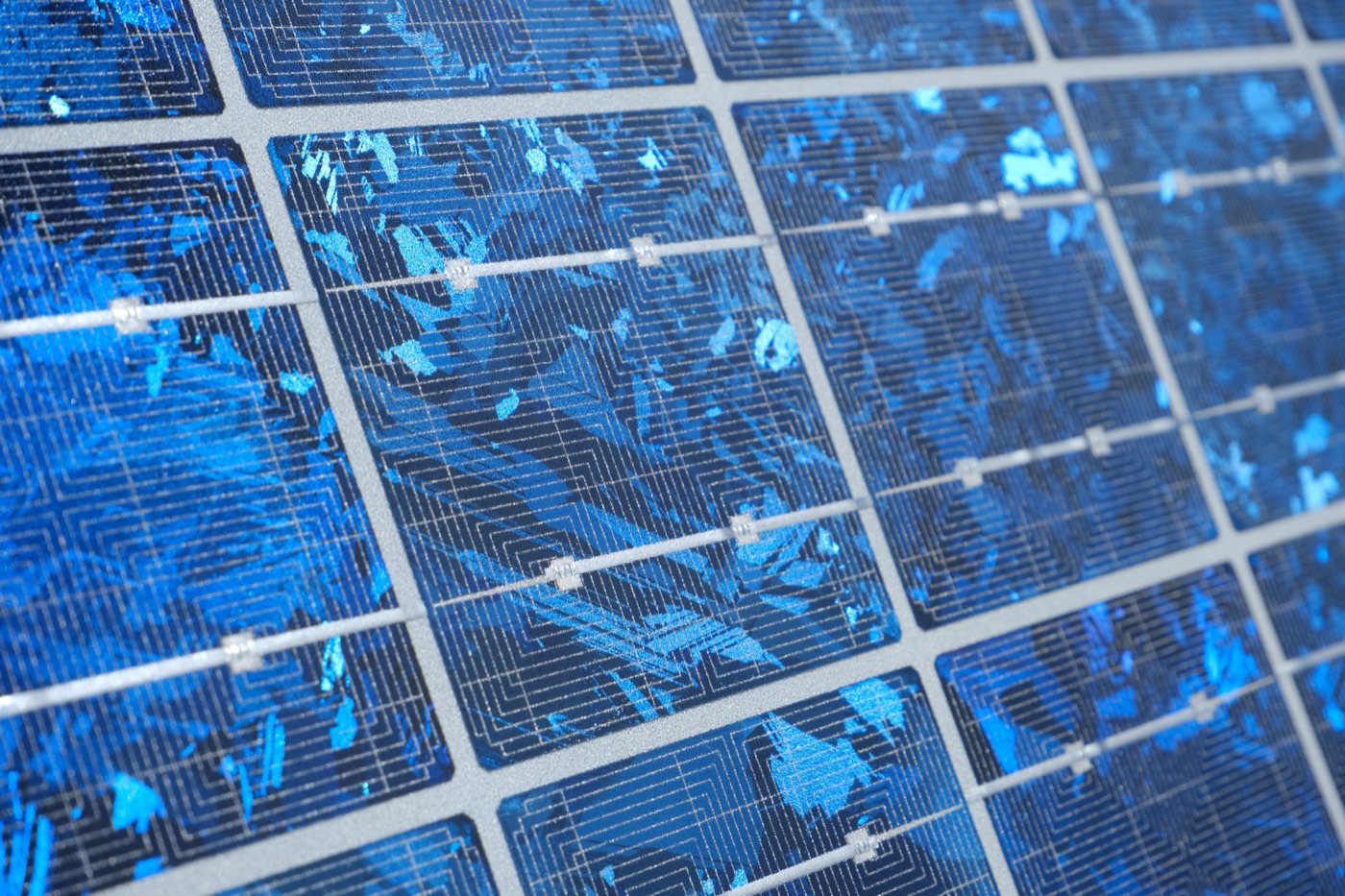
Short answer: Solar panels work through the photovoltaic effect: sunlight striking silicon cells knocks electrons loose, and the panel’s internal wiring channels that movement into a flow of direct current (DC) electricity. An inverter then converts that DC power into the alternating current (AC) electricity your home’s outlets and appliances actually use.
This guide breaks down each part of that process in plain terms — what panels are made of, how the inverter fits in, what happens when the sun isn’t shining, and how long the equipment actually lasts — so you understand what you’re buying before you ever get a quote.
The photovoltaic effect, explained simply
Every solar panel is built around cells made primarily of silicon, a semiconductor material. When sunlight (specifically, photons) hits a silicon cell, it transfers enough energy to knock electrons loose from their atoms. Each cell is manufactured with two distinct layers, one treated to have an excess of electrons and one treated with a shortage, which creates a built-in electric field. That field pushes the freed electrons in one direction rather than letting them scatter randomly, and a directed flow of electrons is, by definition, electric current.
This is the entire physical basis of solar power. No moving parts, no burning fuel, and no chemical reaction consuming a resource — just sunlight energizing electrons in a material engineered to herd them into a usable current. That current comes out of the panel as direct current (DC), the same basic type of electricity a battery produces.
A single silicon cell only produces a small amount of power on its own, typically a few watts. That’s why a solar panel isn’t one giant cell — it’s a grid of individual cells (commonly 60, 72, or higher-count layouts on residential panels) wired together in a sealed module, sandwiched between a tempered glass front, a weatherproof backsheet, and an aluminum frame. Wiring dozens of cells together in series and parallel combinations is what brings the panel’s combined output up to a useful voltage and wattage, and it’s also why a single cracked or heavily shaded cell can drag down the output of the whole panel — the cells are electrically linked, not independent.
Here’s the short version of how that sunlight ends up as power in your home:
- Sunlight strikes the solar cells. Photons hit the silicon layers inside each panel.
- The photovoltaic effect generates DC electricity. The panel’s internal electric field pushes loose electrons into a steady direct current.
- The inverter converts DC to AC. Since homes and the grid run on alternating current, an inverter transforms the panel’s raw output into usable AC power.
- The electricity is used or exported. AC power runs your home’s lights and appliances in real time, and any surplus is typically sent to the utility grid (or a battery, if the system has one) instead of going to waste.
What solar panels are made of: monocrystalline vs. polycrystalline
Almost all residential solar panels use crystalline silicon cells, but there are two main ways those cells are manufactured, and the difference affects efficiency, cost, and appearance.
Monocrystalline panels are cut from a single, continuous cylindrical crystal of silicon. That uniform structure lets electrons move through the material with less resistance, which is why monocrystalline cells tend to be more space-efficient. They’re identifiable by their uniform, deep black color and rounded-corner cells.
Polycrystalline panels are made by melting multiple fragments of silicon together into a mold before slicing them into wafers. The manufacturing process is simpler and less wasteful of raw material, which historically made polycrystalline panels cheaper, but the multi-crystal structure gives electrons more internal boundaries to cross, translating to somewhat lower efficiency. They have a distinctive blue, speckled appearance from the visible crystal fragments.
| Feature | Monocrystalline | Polycrystalline |
|---|---|---|
| Typical efficiency | Higher (roughly 20-24%) | Lower (roughly 13-18%) |
| Relative cost | Somewhat higher per panel | Somewhat lower per panel |
| Appearance | Uniform black, rounded cell corners | Blue, speckled, square cell corners |
| Space efficiency | Better for limited roof space | Needs more roof area for the same output |
| Common use today | Most residential rooftop installs | Largely discontinued in new U.S. residential installs since the early 2020s |
These efficiency ranges are consistently reported across solar-industry sources rather than a single government dataset — NREL’s own Best Research-Cell Efficiency Chart tracks record lab cells rather than typical commercial products, so treat the ranges above as industry-typical, not a lab record. For most homeowners with a fixed, limited amount of roof space, the higher efficiency of monocrystalline panels is worth the modest price premium, which is part of why monocrystalline has become the dominant residential choice in the US market. Panel type is only one input into overall project cost, though — for a full breakdown of what drives total system pricing, see how much solar panels cost.
The role of the inverter
Solar panels produce direct current (DC) electricity, but the electrical grid and everything plugged into your walls run on alternating current (AC). Direct current flows in one steady direction; alternating current periodically reverses direction, which is the form electricity has to take to travel efficiently over the grid and to work with standard household wiring and appliances. Converting one to the other is the inverter’s entire job, and without it, solar panels would generate power your home literally could not use.
There are two main approaches to doing this conversion in a residential system:
String inverters are a single, centralized unit, usually mounted on an exterior wall or in a garage, that all the panels on a “string” (a series-wired chain) feed into. One inverter handles the DC-to-AC conversion for the whole array. String inverters are the more established, lower-cost option, but because the panels are wired in series, if one panel is shaded or underperforming, it can reduce the output of the entire string — a bit like one dim bulb affecting a string of old-style holiday lights.
Microinverters are small inverters attached to each individual panel, converting DC to AC right at the source before the electricity is combined. Because each panel operates independently, shading or a problem with one panel doesn’t drag down the others, and per-panel performance monitoring is more precise. Microinverters typically cost more up front but can produce a meaningful output advantage on roofs with partial shading, multiple roof angles, or inconsistent sun exposure.
| Feature | String inverter | Microinverters |
|---|---|---|
| Location | One central unit for the whole array | One small unit per panel |
| Shading impact | Affects the whole string | Isolated to the shaded panel |
| Upfront cost | Generally lower | Generally higher |
| Monitoring | System-level (or per-string) | Per-panel |
| Best fit | Simple roofs with uniform, unshaded sun exposure | Roofs with partial shade, multiple angles, or complex layouts |
Neither option is universally “better” — the right choice depends on your roof’s shading and layout, which is a conversation worth having directly with an installer rather than deciding from a spec sheet alone.
There’s also a middle-ground option worth knowing the name of: power optimizers. These are small devices attached to each panel, similar in placement to a microinverter, but they don’t perform the DC-to-AC conversion themselves — they condition and optimize each panel’s DC output before sending it to a central string inverter for conversion. This combines some of the per-panel shading resilience of microinverters with some of the lower cost of a string inverter setup, and it’s a common recommendation for roofs with mild, partial shading rather than severe shading.
Conversion isn’t perfectly lossless, either. Inverters have their own efficiency rating, typically in the high-90s percent range for quality equipment, meaning a small amount of energy is lost as heat during the DC-to-AC conversion. That efficiency figure is one of the specs worth asking an installer about, since it compounds over the life of the system.
What happens on cloudy days or at night
Solar panels don’t need direct, unobstructed sunlight to produce electricity — they respond to daylight generally, including the diffused light that passes through clouds. On an overcast day, panels still generate power, just at reduced output that varies more than most marketing material suggests. A peer-reviewed review of environmental factors affecting solar photovoltaic output found reductions of up to 60% under heavy cloud, aerosol, and dust conditions, while light haze or thin cloud cover causes a much smaller drop. There isn’t a single clean “cloudy day” percentage that applies everywhere — it depends on cloud density, thickness, and local atmospheric conditions.
At night, panels produce no electricity at all. There’s no sunlight to trigger the photovoltaic effect, so output drops to zero the moment the sun sets, regardless of weather. This is a fundamental limitation of solar generation, not a flaw in any particular panel or brand.
Because of this day/night and sunny/cloudy variability, most grid-connected solar systems rely on net metering: exporting surplus electricity to the utility grid during high-production hours and drawing power back from the grid at night or during low-production periods, often at a favorable credit rate depending on your state’s rules. This is also why the vast majority of residential systems remain connected to the grid rather than operating fully off-grid — the grid effectively acts as a free, unlimited backup source for the hours when your panels aren’t producing enough (or anything at all).
Homeowners who want to reduce their reliance on the grid, or who want backup power during outages regardless of what a utility credit is worth, typically add a home battery to store excess daytime production for use after dark. For a full explanation of how that works, see home battery storage 101.
Snow is a related, commonly asked-about scenario: a light dusting often melts fairly quickly once panels start absorbing sunlight and generating a bit of heat, but a thick, packed snow layer can block light entirely and drop output to zero until it melts or slides off, a function of the panel’s tilt angle and surface.
How long solar panels last
Solar panels are remarkably durable because they have no moving parts to wear out mechanically. Manufacturers commonly back residential panels with a 25-year performance warranty, guaranteeing the panels will still produce above a specified percentage of their original output by that point. In practice, well-installed panels frequently continue generating usable electricity for 30 years or more beyond installation, just at a somewhat reduced capacity compared to day one.
That gradual decline is called degradation, and it’s a normal, predictable characteristic of crystalline silicon panels rather than a sign of malfunction. The most-cited research on this is NREL’s analysis of nearly 2,000 degradation measurements (Jordan & Kurtz, 2012) and a larger follow-up compendium of over 11,000 degradation rates from roughly 200 studies across 40 countries (Jordan, Kurtz, VanSant & Newmiller, 2016). Both found a median degradation rate of about 0.5% of output per year for crystalline silicon panels, meaning a panel producing 100% of its rated output in year one would still be producing roughly 87-90% after 20-25 years at the median rate. Degradation tends to happen a little faster in the first year (sometimes called “light-induced degradation”) before settling into a slower, steadier annual rate, and it can be modestly accelerated by prolonged high heat. Degradation rates vary by manufacturer and panel quality, which is one reason it’s worth comparing warranty terms, not just sticker price, when evaluating quotes — a topic covered in more depth in is solar worth it.
It’s worth separating two different warranties that often get mentioned together: the performance warranty (which guarantees a minimum output level over 25-plus years, as described above) and the equipment or product warranty (which covers manufacturing defects in the physical panel). Industry sources including EnergySage’s inverter warranty guide and GreenLancer report standard equipment warranties of roughly 10-12 years for inverters (SMA and SolarEdge both standardize on 12 years, Fronius on 10), while microinverters from manufacturers like Enphase are commonly warrantied up to 25 years — confirm current terms directly with the manufacturer, since these change. Installers typically carry their own separate workmanship warranty on top of both, covering the quality of the installation itself.
Typical maintenance
Because solar panels have no moving parts and are built to withstand outdoor exposure, ongoing maintenance is minimal compared to most home systems. In many climates, periodic rainfall is enough to keep panels reasonably clean of everyday dust. Homeowners in dustier, drier climates, or those with panels at a very low tilt angle, may benefit from occasional manual cleaning to remove built-up dirt, pollen, or debris that can reduce output.
Beyond cleaning, routine maintenance mostly consists of periodic visual inspection for physical damage (cracked panels, loose mounting hardware, or damaged wiring) and checking that the inverter and any monitoring software are reporting normal performance. Many homeowners schedule a professional inspection every few years, particularly around the time a warranty milestone approaches, to confirm the system is degrading within expected ranges and catch any developing issues, like a failing inverter, before they meaningfully affect output.
The bottom line
Solar power comes down to a straightforward physical process: sunlight excites electrons in silicon cells, an inverter converts that raw DC electricity into usable AC power, and the electricity either powers your home directly or gets exported to the grid. Panel type, inverter design, and installation quality all affect how efficiently that process runs and how long the system lasts, but the underlying science doesn’t change from one house to the next. Understanding these fundamentals is the foundation for evaluating any solar quote, since cost, incentives, and financing decisions all build on top of how the equipment actually works.
Sources
- Jordan, D.C. & Kurtz, S.R., “Photovoltaic Degradation Rates — An Analytical Review,” NREL, 2012 — osti.gov (consulted August 9, 2026)
- Jordan, Kurtz, VanSant & Newmiller, “Compendium of Photovoltaic Degradation Rates,” NREL, 2016 — osti.gov (consulted August 9, 2026)
- NREL, “Best Research-Cell Efficiency Chart” — nrel.gov (consulted August 9, 2026)
- “The environmental factors affecting solar photovoltaic output,” peer-reviewed review — ScienceDirect (consulted August 9, 2026)
- EnergySage, “Solar Inverter Warranties” — energysage.com (consulted August 9, 2026)
- GreenLancer, “Solar Inverter Warranty” — greenlancer.com (consulted August 9, 2026)
Frequently asked questions
Do solar panels work on cloudy days?
Yes, but at reduced output that varies a lot by cloud thickness and conditions. A peer-reviewed review of environmental factors affecting solar output found reductions of up to 60% under heavy cloud, aerosol, and dust conditions, while light haze or thin cloud cover causes a much smaller drop. They produce nothing at night, which is why many homeowners pair solar with net metering or a home battery to cover after-dark usage.
How long do solar panels last?
Most solar panels carry a manufacturer performance warranty of 25 years and continue producing usable electricity well beyond that, often 30 years or more. They don't stop working at the warranty date — they degrade gradually. NREL's analysis of roughly 2,000 degradation measurements found a median rate of about 0.5% of output capacity lost per year for crystalline silicon panels.
What is the difference between monocrystalline and polycrystalline solar panels?
Monocrystalline panels are made from a single continuous silicon crystal, which makes them more efficient and more expensive, with a uniform dark black appearance. Polycrystalline panels are made from multiple silicon fragments melted together, making them slightly less efficient and less expensive, with a characteristic blue, speckled look. Most residential installations today use monocrystalline panels because roof space is limited and higher efficiency matters more than a small cost difference.
Do I need an inverter with solar panels?
Yes. Solar panels generate direct current (DC) electricity, but homes and the grid run on alternating current (AC). An inverter is the component that converts the panels' DC output into usable AC power, and a home solar system cannot function without one, whether it's a single string inverter or a microinverter on each panel.
How much maintenance do solar panels need?
Very little. Solar panels have no moving parts, so routine maintenance is mostly limited to occasional cleaning to remove dust, pollen, or debris and periodic visual inspection, often rain alone keeps panels adequately clean. Most homeowners schedule a professional inspection every few years to check wiring, mounting hardware, and inverter performance.
Written by
ClearWatt Editorial TeamThe ClearWatt Editorial Team researches and writes every guide on this site. We work from primary sources — federal and state agencies (EIA, NREL, DSIRE, IRS), legislative text, utility rate schedules, and manufacturer documentation — rather than summarizing other websites' coverage of the same topic. We are not licensed solar installers, financial advisors, or tax preparers, and nothing published here is a substitute for advice from one. When a figure can't be traced to a specific, current source, we say so and give a range instead of a false-precision number. Articles are dated, and we correct confirmed errors promptly. See our Editorial Policy for the full standard every guide is held to, and About & Methodology for the sources we draw from.