Section: How It Works
String Inverters vs. Microinverters vs. Power Optimizers
By ClearWatt Editorial Team · Published June 8, 2026
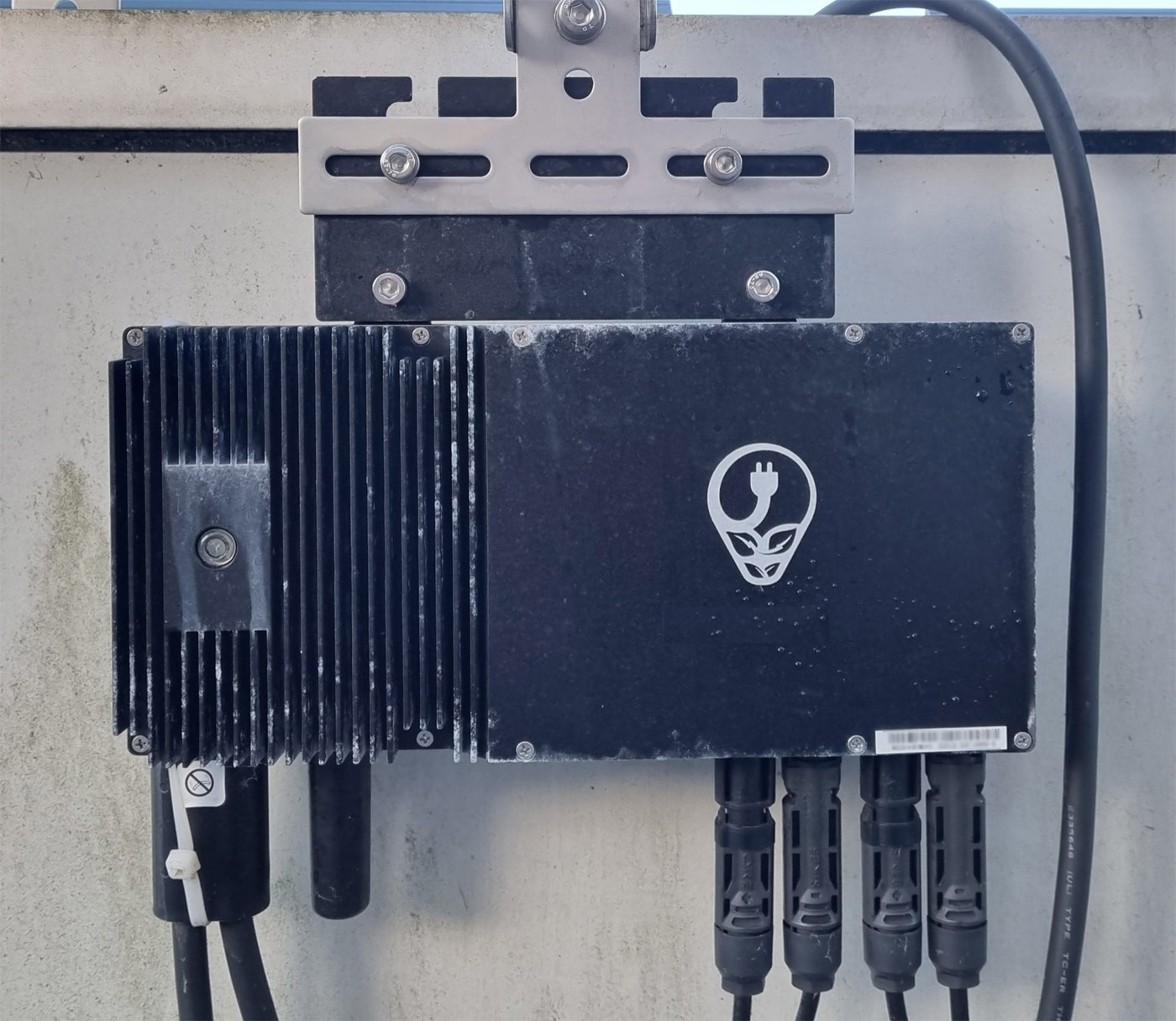
Short answer: A string inverter converts power from a whole chain of panels at once; a microinverter converts each panel’s power individually at the panel; a power optimizer conditions each panel’s output individually but still routes it to a separate central string inverter. The old claim that microinverters produce “20% more power” hasn’t held up in later research — but a 2023 peer-reviewed study confirms module-level electronics do meaningfully cut shading losses.
Choosing an inverter type is one of the more consequential decisions in a solar system design, and it’s also one of the most oversimplified in marketing material. Here’s how the three approaches actually work, what real efficiency numbers look like, and what current, honest research says about the shading advantage that’s often cited as the deciding factor.
How each type actually works
String inverter: Panels are wired together in a series “string,” and their combined DC output travels to one central inverter — often mounted near the electrical panel or on an exterior wall — which converts it to AC all at once. It’s the simplest, most established architecture, and the whole string’s output is limited by its weakest-performing panel, since the panels in a string are electrically linked.
Microinverter: A small inverter is attached directly to the back of each individual panel, converting that panel’s DC output to AC right at the source. Because each panel has its own inverter, one shaded, dirty, or underperforming panel doesn’t drag down the output of the others in the array.
Power optimizer: This sits in between the other two approaches. A small DC-to-DC optimizer is attached to each panel, which conditions and maximizes that panel’s individual output — but the conditioned DC power from every panel still travels to one central string inverter for the actual DC-to-AC conversion. You get some of the per-panel independence of microinverters, paired with the simpler central inverter architecture of a string system.
What the efficiency numbers actually say
Efficiency ratings for inverter hardware are one area where manufacturers publish real, comparable numbers.
Enphase states in its own IQ8/IQ8+ microinverter datasheet a CEC weighted efficiency of 97%, with the IQ8M variant rated at 97.5%.
SolarEdge’s official application note on optimizer efficiency states a maximum efficiency of 99.5% and a weighted (CEC/European) efficiency of 98.8% for its power optimizers. That number describes the optimizer stage alone — because optimizers pair with a separate string inverter to complete the DC-to-AC conversion, your system’s real overall efficiency also depends on that second inverter’s own efficiency rating, not the optimizer number by itself.
Both figures are high and reasonably close to each other. The bigger practical difference between architectures isn’t this baseline conversion efficiency — it’s how each system handles shading and partial panel underperformance, which is where the research gets more interesting, and more contested.
The 2011 study everyone still cites
Much of the “microinverters produce more power” claim traces back to a single, often-cited 2011 Appalachian State University study by Lee and Raichle. It found microinverters producing roughly 20% more power than a central string inverter in both shaded and unshaded conditions — and up to roughly 26% more when a small object shaded just 3.2% of a single panel’s surface.
That study is real and it’s been widely repeated in solar marketing for over a decade. But repeating a single 15-year-old study as if it settles the question for every roof, every panel generation, and every inverter product on the market today is exactly the kind of unsourced generalization that gets flagged as low-value content — so it’s worth looking at what more recent, larger-scale research actually found.
What more recent research found: it’s complicated
Two more recent studies complicate the simple “microinverters win” narrative, in opposite directions.
A 2021 study out of the University of Limoges in France, published via pv magazine’s summary, compared 200 real residential PV installations — 100 systems using Enphase microinverters and 100 using SMA string inverters. It found essentially no measurable field advantage for microinverters: both groups averaged a performance ratio of about 79%. At the scale of real installed systems rather than a single controlled test setup, the two architectures performed about the same overall.
A 2023 peer-reviewed study by Allenspach et al., published in Solar RRL by researchers at the ZHAW Institute of Energy Systems in Switzerland, tells a different story specifically for shaded conditions. Under real pine-tree shading on residential-scale arrays, plain string-inverter systems lost 24% of annual energy yield to shading, while the same array fitted with SolarEdge power optimizers lost only 9% — a substantial, real, and current advantage for module-level electronics under actual shading, not a lab simulation.
The honest conclusion
Putting these together: the original 2011 figure of “microinverters produce ~20% more power” has not held up cleanly at scale — the 2021 French study of 200 real installations found no meaningful difference in overall field performance between microinverter and string-inverter systems. But the 2023 Swiss peer-reviewed study confirms that module-level electronics, specifically power optimizers, still deliver a real and meaningful benefit under actual shading conditions, cutting shading-related yield loss roughly in half to two-thirds compared to a plain string inverter.
The accurate framing is that the benefit of module-level electronics is real but shading-dependent and system-specific — not a flat “you’ll get 20% more power” guarantee that applies to every roof regardless of shading. If your roof has no meaningful shading, the case for paying more for microinverters or optimizers is weaker than marketing material often suggests. If part of your roof is shaded by trees or structures at any point in the day, the 2023 data gives a concrete, current reason to consider module-level electronics.
Cost and roof-shape considerations
Both microinverters and power optimizers typically cost more upfront than a basic string-inverter-only system, because they add a device at every panel rather than a single central unit. There isn’t a reliable, specific public figure for how much more, so this is worth getting concrete quotes on for your specific system rather than relying on a general percentage.
Roof shape and shading pattern matter as much as cost here. If you’re evaluating a small, irregularly shaped, or partially shaded roof — the scenario covered in our guide to solar for small or shaded roofs — module-level electronics are more likely to be worth the added cost than on a large, uniformly sun-exposed roof. Inverter choice also interacts with panel efficiency choices; see our explainer on solar panel efficiency for how those two decisions relate.
This article summarizes third-party research for general education; it isn’t engineering advice for a specific system, and equipment decisions should be made with a licensed installer who can assess your actual roof and shading pattern.
Sources
- Enphase, “IQ8 and IQ8+ Microinverters (MC4 Connectors) Data Sheet” — enphase.com (consulted August 9, 2026)
- SolarEdge, “Application Note: SolarEdge Optimizers Efficiency” — knowledge-center.solaredge.com (consulted August 9, 2026)
- Lee, D. and Raichle, B., Appalachian State University, “Solar Panel Micro-Inverters vs. Central-Inverters, Shaded and Unshaded” (2011) — kasselmansolar.com (consulted August 9, 2026)
- pv magazine, “Micro-inverters vs. string, central inverters” (2021), summarizing University of Limoges research — pv-magazine.com (consulted August 9, 2026)
- Allenspach et al., “Impact of Shading on the Energy Yield of PV Systems: String vs. Optimizer,” Solar RRL (2023), ZHAW Institute of Energy Systems — onlinelibrary.wiley.com (consulted August 9, 2026)
Frequently asked questions
What is the difference between a string inverter, a microinverter, and a power optimizer?
A string inverter is a single large device that converts DC power from an entire chain (string) of panels into AC power all at once. A microinverter is a small inverter attached to each individual panel that converts DC to AC right at the panel. A power optimizer is not a full inverter; it conditions each panel's DC output individually before sending it to a separate central string inverter for the actual DC-to-AC conversion.
Do microinverters really produce 20% more power than string inverters?
That figure comes from a single 2011 Appalachian State University study and has not held up cleanly at scale. A 2021 study of 200 real residential installations in France found essentially no measurable field difference between microinverter and string-inverter systems, with both averaging about a 79% performance ratio. The honest conclusion is that any advantage is shading-dependent and system-specific, not a flat 20% gain you should expect on every roof.
Do power optimizers actually help with shading?
Yes, according to a 2023 peer-reviewed study from ZHAW Institute of Energy Systems in Switzerland. Under real pine-tree shading on residential-scale arrays, plain string-inverter systems lost 24% of annual yield to shading, while the same array fitted with SolarEdge power optimizers lost only 9%. That's a meaningful, current, real-world advantage specifically under shaded conditions.
Are microinverters or power optimizers more expensive than a string inverter?
Both microinverters and power optimizers typically cost more upfront than a basic string-inverter-only system, since they add a device at every panel rather than one central unit. Reliable, specific pricing comparisons are hard to source publicly and vary by installer and market, so get quotes for your specific roof rather than relying on a general percentage.
Which inverter type should I choose for a shaded roof?
If part of your roof is regularly shaded by trees, chimneys, or neighboring structures, the current peer-reviewed evidence favors module-level electronics — either microinverters or power optimizers — over a plain string inverter, because they let each panel operate independently instead of the whole string being dragged down by the weakest panel.
Written by
ClearWatt Editorial TeamThe ClearWatt Editorial Team researches and writes every guide on this site. We work from primary sources — federal and state agencies (EIA, NREL, DSIRE, IRS), legislative text, utility rate schedules, and manufacturer documentation — rather than summarizing other websites' coverage of the same topic. We are not licensed solar installers, financial advisors, or tax preparers, and nothing published here is a substitute for advice from one. When a figure can't be traced to a specific, current source, we say so and give a range instead of a false-precision number. Articles are dated, and we correct confirmed errors promptly. See our Editorial Policy for the full standard every guide is held to, and About & Methodology for the sources we draw from.