Section: How It Works
Solar Panel Efficiency Explained: What the Percentage Actually Means
By ClearWatt Editorial Team · Published July 31, 2026
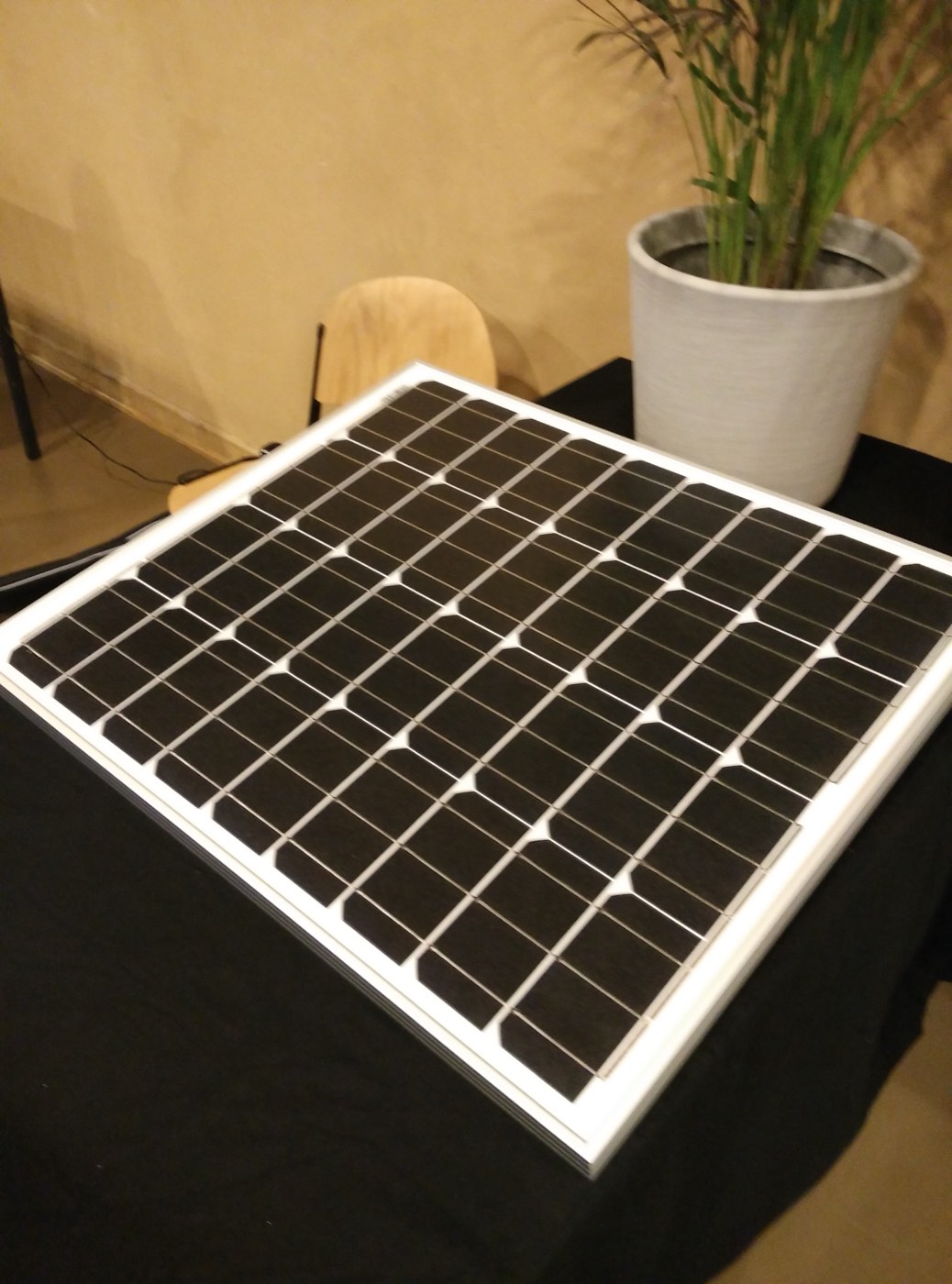
Short answer: Solar panel efficiency is the percentage of sunlight energy hitting a panel that it converts into usable electricity. Industry sources describe typical residential panels in 2025-2026 as running in the 20-23% range, with the highest manufacturer-stated ratings reaching into the low-to-mid 24% range. The physical ceiling for today’s silicon cell design, the Shockley-Queisser limit, sits at approximately 29.4%.
Efficiency is one of the most misunderstood numbers on a solar spec sheet. It doesn’t tell you how much total electricity a panel will produce over its life, and a “low” efficiency rating doesn’t mean a panel is a bad product. Here’s what the number actually measures, what today’s panels achieve, why they can’t reach 100%, and when paying more for higher efficiency is actually worth it.
What “efficiency” actually measures
A solar panel’s efficiency rating is the percentage of the sunlight energy striking its surface that it converts into usable electrical output, measured under standardized test conditions. If a panel with 2 square meters of surface area receives roughly 2,000 watts of solar energy under standard test conditions and outputs 440 watts, its efficiency is about 22%.
That percentage is a ratio, not a measure of total power. A large, lower-efficiency panel can still produce more total electricity than a small, higher-efficiency one — efficiency just tells you how much power you get per square foot of panel. That distinction matters more than almost anything else on the spec sheet when you’re deciding whether efficiency should drive your purchase.
What today’s panels actually achieve
Manufacturer-stated efficiency figures for premium residential panels currently top out in the low-to-mid 24% range. SunPower’s Maxeon 7 datasheet states efficiency up to 24.1% in a 435-445W panel format. Qcells advertises its N-type TOPCon Q.TRON line at up to 22.5% in a 440Wp panel.
Those are the high end. As a general pattern, industry sources describe typical residential panels sold in 2025-2026 as running in the 20-23% efficiency range — this is consistent across multiple industry sources as a broad description of the current market rather than a single precise figure, and it’s worth treating it that way rather than as one hard number. Two concrete examples in that range: REC’s Alpha Pure-RX rates up to 22.6%, and Panasonic’s EverVolt rates around 21.2%. A panel anywhere in that band is a normal, current-generation product, not an outdated one.
Why panels can’t reach 100% — the Shockley-Queisser limit
Every silicon solar cell on the market today is a “single-junction” cell — one layer of silicon doing the light-to-electricity conversion. Physics sets a hard ceiling on how efficient that kind of cell can ever be, known as the Shockley-Queisser limit, calculated at approximately 29.4% for silicon. The 2025 Nature Communications paper on record silicon cell efficiency situates its result against this same theoretical ceiling.
The limit exists because silicon can only efficiently capture photons within a certain range of the light spectrum; photons with too little energy pass through unused, and photons with too much energy waste their excess as heat rather than electricity. No amount of manufacturing refinement changes that underlying physics for a single-junction silicon cell — it would take a fundamentally different cell architecture (multiple stacked junctions capturing different parts of the spectrum, for example) to move past it, which is part of why multi-junction and tandem cell research exists, though those designs aren’t yet standard in residential products.
That gap between today’s 20-24% commercial panels and the 29.4% ceiling is exactly why manufacturers keep announcing incremental efficiency gains — there’s still real room to improve, just not unlimited room.
Lab records vs. what you can actually buy
Efficiency headlines sometimes cite numbers well above anything sold commercially, and it’s worth being precise about what those numbers represent. A 2025 peer-reviewed paper in Nature Communications reports a total-area world-record efficiency of 27.03% for a 350.0 cm² commercial-sized single-junction silicon solar cell — achieved in laboratory conditions, on an individual cell, not a full production panel you can order for your roof.
Lab records like this matter because they show what’s technically achievable and often preview where commercial products are headed over the following several years. But there’s a real gap between a record-setting lab cell and a panel installed on a house, and no residential panel on the market today reaches that 27% figure. If a specific product claims to match or beat a laboratory record, that claim deserves scrutiny.
When higher efficiency is actually worth paying for
This is the practical question, and the answer depends almost entirely on your roof, not on a general rule about “better” panels.
Limited roof space: If your usable roof area is small, oddly shaped, or partially shaded — the kind of situation covered in our guide to solar for small or shaded roofs — higher-efficiency panels let you fit more total wattage into a fixed area. Going from a 20% panel to something closer to Maxeon’s 24.1%-rated Maxeon 7 means meaningfully more power output from the same physical footprint, which can be the difference between a system that covers your usage and one that falls short.
Large, unshaded roof: If you have abundant roof space, efficiency matters much less. You can typically reach your target system size by simply adding more standard-efficiency panels rather than paying a premium for fewer, higher-efficiency ones. In that scenario, cost per watt and total installed price usually matter more than the efficiency percentage on the spec sheet — a topic covered in our guide to what solar panels cost in 2026.
The panel’s efficiency rating is also just one factor among several electrical design choices that affect how your system performs under real-world conditions like partial shading — see our comparison of string inverters, microinverters, and power optimizers for how the rest of the system interacts with panel-level output.
The bottom line
Efficiency is a measure of power density, not overall quality or total output. Today’s commercial panels cluster in the 20-24% range, physics caps single-junction silicon at roughly 29.4%, and laboratory records above that (like the 27.03% figure from 2025) point to future potential rather than something you can install today. Whether to prioritize efficiency in your own purchase comes down to one practical question: is roof space your limiting factor, or is it budget?
This article is for general education and doesn’t constitute engineering or purchasing advice for your specific roof; get a site-specific assessment from a licensed installer before making equipment decisions.
Sources
- Maxeon Solar, “Maxeon 7 Datasheet” — maxeon.com (consulted August 9, 2026)
- Qcells, “Q.TRON — Next Level Power” — us.qcells.com (consulted August 9, 2026)
- Nature Communications, “27.03% efficient silicon solar cells” (2025) — nature.com (consulted August 9, 2026)
- REC Group, “Alpha Pure-RX” module specifications — recgroup.com (consulted August 9, 2026)
- Panasonic, “EverVolt” module specifications — solar.na.panasonic.com (consulted August 9, 2026)
Frequently asked questions
What does solar panel efficiency percentage mean?
It's the share of sunlight energy hitting a panel's surface that the panel actually converts into usable electricity. A panel rated at 22% efficiency turns 22% of the solar energy striking it into electrical output; the rest is lost to reflection, heat, and the physical limits of the silicon itself.
What is a good solar panel efficiency rating in 2026?
Industry sources describe typical residential panels in 2025-2026 as running in the 20-23% range as a general pattern, with the highest manufacturer-stated ratings from premium product lines reaching into the low-to-mid 24% range, such as Maxeon's 24.1% figure for its Maxeon 7 panel.
Can solar panels ever reach 100% efficiency?
No. A single-junction silicon solar cell — the type used in virtually all residential panels — has a well-established theoretical ceiling called the Shockley-Queisser limit, at approximately 29.4%. Physics, not manufacturing quality, sets that ceiling; no amount of engineering on today's silicon cell design can exceed it.
Why don't all homeowners just buy the most efficient panel available?
Higher-efficiency panels typically cost more per panel. On a large, unshaded roof with plenty of room, you can often reach the same total system size with more standard-efficiency panels instead, at a lower cost. Efficiency becomes worth paying for mainly when roof space is the limiting factor.
Is a lab record efficiency the same as what I can buy for my roof?
No. Lab records, like the 27.03% total-area efficiency reported in a 2025 Nature Communications paper for a commercial-sized silicon cell, are achieved under controlled laboratory conditions on individual cells. They show where the technology is headed, but they are not yet available in any commercial residential panel.
Written by
ClearWatt Editorial TeamThe ClearWatt Editorial Team researches and writes every guide on this site. We work from primary sources — federal and state agencies (EIA, NREL, DSIRE, IRS), legislative text, utility rate schedules, and manufacturer documentation — rather than summarizing other websites' coverage of the same topic. We are not licensed solar installers, financial advisors, or tax preparers, and nothing published here is a substitute for advice from one. When a figure can't be traced to a specific, current source, we say so and give a range instead of a false-precision number. Articles are dated, and we correct confirmed errors promptly. See our Editorial Policy for the full standard every guide is held to, and About & Methodology for the sources we draw from.