Section: Incentives & Policy
Net Metering Explained: How Solar Credits Work and Why They Vary by State
By ClearWatt Editorial Team · Published July 3, 2026
Short answer: Net metering credits you for surplus solar power sent to the grid, then lets you draw on that credit later. How much that credit is worth depends entirely on your state and utility — New Jersey still pays the full retail rate 1:1, while California, Nevada, and Arizona have each replaced or reduced that rate, and Texas has no statewide mandate at all.
What net metering actually is
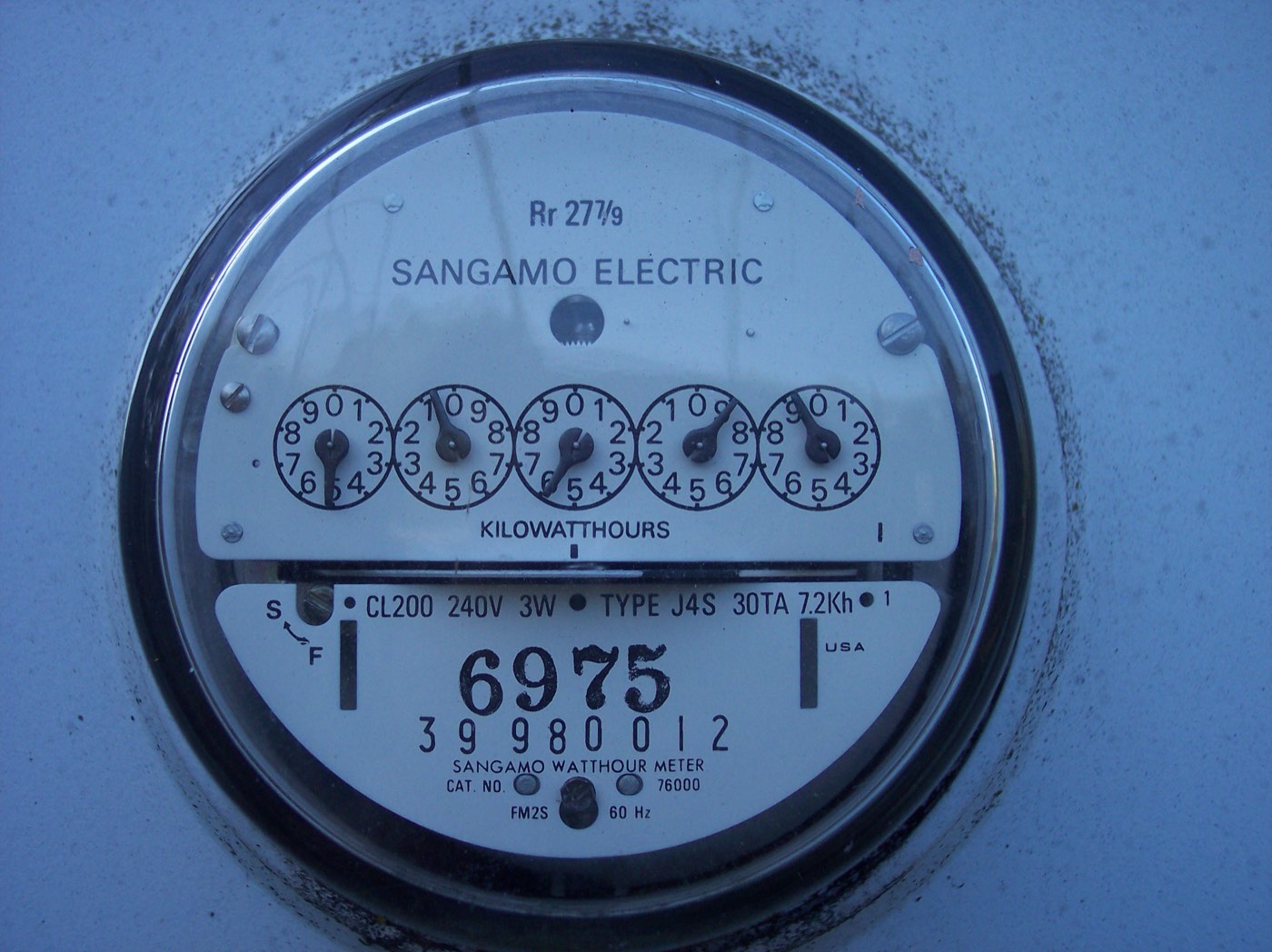
When your solar panels produce more electricity than your home is using at that moment — typically midday — the surplus normally flows out through your electric meter and onto the grid. Net metering is the billing arrangement that determines what you get in return. Under a traditional net metering policy, your utility runs the meter “backward,” crediting you at or near the retail rate for every exported kilowatt-hour, and that credit offsets electricity you draw from the grid when your panels aren’t producing enough, such as after sunset.
The mechanics sound simple, but the value of that credit is not standardized nationally. It’s set state by state, and sometimes utility by utility within a state, through legislation or public utility commission rulings. That single variable — what your exported power is actually worth — affects long-term solar economics more than almost any other factor, including the price you paid for the system itself.
Why the export rate matters more than people expect
Two homeowners can install identical solar systems and end up with very different payback timelines purely because of where they live. If your utility credits exports at the full retail rate, every kilowatt-hour your panels send to the grid is worth exactly what you’d otherwise pay to buy it. If your utility instead pays a reduced “avoided cost” or wholesale-linked rate, that same exported power might be worth a fifth of what you’d pay to buy it back — meaning a system that looks financially similar on a spec sheet can take years longer to pay for itself depending purely on export policy. This is why the same panels, same roof, same sun exposure, can produce dramatically different savings in different states.
New Jersey: full 1:1 retail-rate net metering
New Jersey is one of the clearest examples of traditional net metering still in force. Under N.J.S.A. § 48:3-87(e), the state requires electric utilities to credit exported solar generation at the full retail rate, one kilowatt-hour exported for one kilowatt-hour credited, with monthly rollover of unused credit. This is the benchmark against which reduced or restructured policies are usually compared.
California: from retail-rate net metering to a Net Billing Tariff
California moved away from retail-rate net metering under CPUC Decision D.22-12-056, approved December 15, 2022 and effective April 15, 2023. In place of the old 1:1 credit, the state now uses a Net Billing Tariff, which values exports according to an hourly Avoided Cost Calculator rather than the retail rate. The commonly cited effect is a drop in export value from roughly $0.30/kWh under the prior rules to somewhere around $0.05–0.08/kWh under the new tariff, though the exact figure varies hour by hour based on grid conditions, so any homeowner evaluating a California system should confirm current numbers with their utility rather than relying on either of those figures as fixed.
Nevada: a policy reversal and a tiered restoration
Nevada offers the most-documented cautionary tale in net metering history. In December 2015, under SB 374 (2015), the Public Utilities Commission of Nevada slashed net metering compensation and eliminated grandfathering for existing solar customers — a decision that caused the state’s residential solar market to collapse almost overnight, as major installers pulled out of the state entirely. Facing public backlash and appeals, PUCN partially restored grandfathering in late 2016, and NV Energy itself appealed the December 2015 decision as the fight continued.
The Nevada Legislature then passed Assembly Bill 405 in 2017, restoring net metering under a declining four-tier structure tied to cumulative statewide solar capacity in 80-megawatt blocks. According to the Public Utilities Commission of Nevada’s official net metering page, the tiers ran: Tier 1 at 95% of the retail rate (closed August 2018), Tier 2 at 88% (closed June 2019), Tier 3 at 81% (closed June 2020), and Tier 4 at 75% of the retail rate, which remains open today with no capacity cap and is locked in for 20 years at the time a customer enrolls. Nevada’s experience is a concrete illustration of why “current export rate” and “rate locked at enrollment” are two different things worth asking your installer about explicitly.
Arizona: net metering replaced by a calculated export rate
On December 20, 2016, the Arizona Corporation Commission eliminated traditional net metering statewide in Docket E-00000J-14-0023, replacing it with a utility-specific “export rate” tied to a Resource Comparison Proxy — a five-year weighted average cost of utility-scale solar generation, recalculated periodically in each utility’s rate case. Existing customers at the time were grandfathered onto the old terms for 20 years. Details on the decision are covered by the Arizona Capitol Times and explained further by Solar United Neighbors. Current export rates are set per utility and change with each rate case — Arizona Public Service’s rate has run at roughly 6 cents per kWh in recent cases, though that figure should be treated as an approximate, moving target rather than a fixed number, and confirmed directly with the utility serving your address.
Texas: no statewide net metering mandate
Texas is a structurally different case rather than a single policy decision. The state has no law requiring net metering. In the deregulated ERCOT retail market, more than 100 Retail Electric Providers each set their own “solar buyback” rate independently, with no statewide floor or standard. According to SolarReviews’ guide to Texas net metering, buyback rates on fixed plans commonly run around 3 cents per kWh, while wholesale-indexed plans can pay significantly more during grid scarcity events — and significantly less, or nothing, otherwise. For a Texas homeowner, “does my export policy help my payback” isn’t a state-level question at all; it’s a plan-by-plan comparison that has to be shopped like any other retail electricity contract.
Florida: retail-rate monthly credit, avoided-cost annual true-up
Florida looks like full net metering on the surface but has an important wrinkle. Under Florida Statutes § 366.91, investor-owned utilities must offer net metering, and monthly excess generation is credited at the full retail rate, rolled forward as a kilowatt-hour credit toward future bills. The catch comes at the annual true-up: any credit still unused at that point is cashed out at the utility’s much lower avoided-cost rate, or forfeited entirely, depending on the specific tariff. In practice, Florida rewards households whose usage pattern draws down their banked credit over the course of the year and penalizes those who bank a large surplus that survives to the annual reset — a genuinely different structure from New Jersey’s straightforward 1:1 policy, even though both states are often described simply as having “net metering.”
Comparing the six examples
| State | Policy type | Export value |
|---|---|---|
| New Jersey | Traditional net metering | Full retail rate, 1:1, monthly rollover |
| Florida | Net metering with annual true-up | Full retail rate monthly; avoided cost (or forfeited) on unused annual surplus |
| California | Net Billing Tariff | Hourly Avoided Cost Calculator, roughly $0.05–0.08/kWh |
| Nevada | Tiered restoration | Tier 4, currently open: 75% of retail rate, locked 20 years at enrollment |
| Arizona | Resource Comparison Proxy export rate | Utility-specific, recalculated per rate case (~6¢/kWh for APS, approximate) |
| Texas | No state mandate | Set independently by 100+ retail electric providers, roughly 3¢/kWh and up |
What to actually check before you sign a contract
Because export compensation swings this widely even among states with an active solar market, the single most useful question to ask before installing is: what is my utility’s current export rate, is it locked in at enrollment or subject to change, and for how long? An installer’s payback estimate is only as good as the export assumption baked into it. If your state has restructured or eliminated favorable net metering — as California, Nevada, and Arizona each have in different ways — pairing solar with a battery to use more of your own generation, rather than exporting it, may change the math in your favor; see our home battery storage guide for that tradeoff. For the fuller landscape of state-level solar incentives beyond net metering, see our state solar incentives guide, and for how this fits into the overall worth-it calculation, see Is Solar Still Worth It in 2026?
This article does not constitute financial or legal advice; net metering and net billing tariffs change through legislative and regulatory action, so confirm current terms directly with your state public utilities commission or your specific utility before making a purchasing decision.
Sources
- California Public Utilities Commission, Decision D.22-12-056 (Net Billing Tariff) — cpuc.ca.gov (consulted August 9, 2026)
- New Jersey Statutes § 48:3-87(e) (net metering) — law.justia.com (consulted August 9, 2026)
- Public Utilities Commission of Nevada, “Net Metering in Nevada” — puc.nv.gov (consulted August 9, 2026)
- Utility Dive, “NV Energy appeals December decision to partially restore net metering” — utilitydive.com (consulted August 9, 2026)
- Green Building Advisor, “Nevada Reverses Unpopular Net-Metering Rule” — greenbuildingadvisor.com (consulted August 9, 2026)
- Arizona Capitol Times, “Commission adopts a new framework for solar energy” — azcapitoltimes.com (consulted August 9, 2026)
- Solar United Neighbors, “Net Metering in Arizona” — solarunitedneighbors.org (consulted August 9, 2026)
- SolarReviews, “Texas Net Metering: The Complete Guide” — solarreviews.com (consulted August 9, 2026)
- Florida Statutes § 366.91 — flsenate.gov (consulted August 9, 2026)
Frequently asked questions
What is net metering in simple terms?
Net metering is a billing arrangement where your utility credits you for surplus electricity your solar panels send to the grid, then lets you draw on that credit when your panels aren't producing enough, such as at night. The value of that credit — full retail rate, a reduced export rate, or something in between — is set by state law or utility tariff and varies enormously depending on where you live.
Is net metering the same in every state?
No. Some states, like New Jersey, mandate full 1:1 retail-rate crediting. Others, like California and Arizona, have replaced traditional net metering with lower export-rate structures. Texas has no statewide net metering mandate at all, leaving compensation up to individual retail electric providers. Always confirm the current rule with your specific utility.
Why did some states move away from net metering?
Utilities and regulators in several states argued that crediting exported solar power at the full retail rate shifts grid maintenance costs onto non-solar customers, since the retail rate includes charges for infrastructure that solar owners still use. Regulatory bodies in California, Nevada, and Arizona each restructured export compensation citing versions of this cost-shift argument, though solar advocates have disputed the framing in each case.
Does net metering affect solar payback time?
Significantly. A household exporting surplus power under full retail-rate net metering, like New Jersey's 1:1 policy, recovers value for every exported kilowatt-hour at the same rate they'd otherwise pay to buy it. Under a reduced export rate, like Arizona's Resource Comparison Proxy or California's Net Billing Tariff, that same exported power is worth a fraction as much, which can add years to a system's payback period.
Can a battery make up for a low export rate?
Often, yes, in states with reduced export compensation. If your utility pays little for exported power but you still pay full retail rates to buy power back at night, storing surplus solar in a battery for your own evening use can be worth more than exporting it. See our guide to home battery storage for the tradeoffs.
Written by
ClearWatt Editorial TeamThe ClearWatt Editorial Team researches and writes every guide on this site. We work from primary sources — federal and state agencies (EIA, NREL, DSIRE, IRS), legislative text, utility rate schedules, and manufacturer documentation — rather than summarizing other websites' coverage of the same topic. We are not licensed solar installers, financial advisors, or tax preparers, and nothing published here is a substitute for advice from one. When a figure can't be traced to a specific, current source, we say so and give a range instead of a false-precision number. Articles are dated, and we correct confirmed errors promptly. See our Editorial Policy for the full standard every guide is held to, and About & Methodology for the sources we draw from.