Section: Special Situations
Community Solar Programs: How Renters and Non-Owners Can Access Solar Savings
By ClearWatt Editorial Team · Published July 28, 2026 · Last updated August 9, 2026
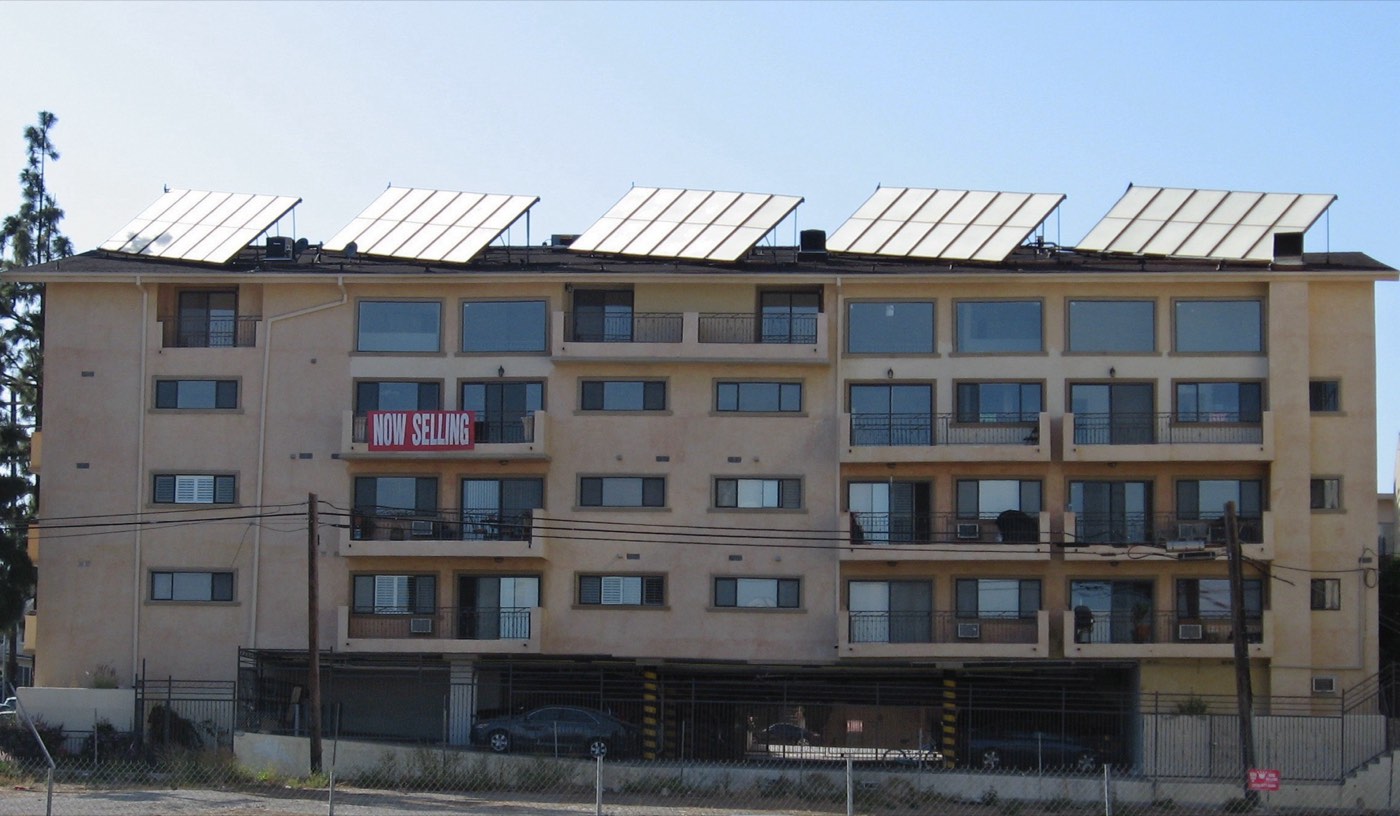
Short answer: Community solar programs let you subscribe to a share of a solar array built elsewhere — often a large ground-mounted installation in your utility’s service area — and receive bill credits for the electricity it generates. You don’t install anything, don’t own equipment, and don’t need to qualify for financing, which makes it one of the few solar options open to renters and homeowners with shaded or unsuitable roofs.
What Community Solar Actually Is
Community solar (sometimes called shared solar or solar gardens) is a model where a solar array is built at one location — a field, a warehouse roof, a parking structure — and the electricity it produces is allocated among multiple subscribers who don’t live at that location. Each subscriber gets credited on their regular electric bill for their share of the output, usually at a rate set by the program or state regulation.
You’re not buying panels. You’re not signing a construction contract. In most programs you’re either paying a monthly subscription fee that’s lower than the value of the credits you receive, or you’re getting credits with no upfront cost at all in exchange for a share of the savings going to the project developer. The specific structure varies a lot by state and by program operator, so the details matter more than the general concept.
Community solar is not available everywhere. As of May 2026, 24 states plus Washington, D.C. have adopted community solar enabling rules, according to DSIRE’s community solar policy tracker — corroborated by the U.S. Department of Energy’s community solar market trends page. A broader DOE figure (roughly 44 states with some community solar capacity, including opt-in utility programs without dedicated state law) is sometimes cited too, but that’s a different, looser measure than “has enabling legislation” — don’t confuse the two.
Six states with genuinely active, well-established programs as of 2026: Colorado (Community Solar Gardens Act of 2010; Xcel Energy’s Solar Rewards Community), Minnesota (Community Solar Gardens plus a newer low-income-accessible program effective 2024), New York (NY-Sun Community Solar via NYSERDA — the nation’s largest community solar market by capacity), Massachusetts (the SMART program’s shared-solar track), Illinois (Illinois Shines, with roughly 435 MW allocated to community solar for the 2025-26 program year), and New Mexico (Community Solar Act of 2021, with a capacity expansion approved in 2026). One caution worth naming explicitly: Maine was long cited as a leading community solar state, but Maine LD 1777, signed in June 2025, barred new enrollments after 2025 and cut existing compensation roughly 20% — don’t rely on older articles that still list Maine as a top example.
Who Community Solar Is For
This model exists specifically for people who can’t or don’t want to put solar panels on their own roof. That includes:
- Renters, who don’t own the building and can’t install a rooftop system
- Homeowners with roofs that are too shaded, too small, or facing the wrong direction for solar
- Condo or HOA residents where rooftop solar isn’t feasible or allowed
- People who plan to move within a few years and don’t want a long-term rooftop commitment
- Anyone who prefers not to take on the upfront cost or maintenance responsibility of owning a system
If you own your home, have decent roof space and sun exposure, and plan to stay put for a while, rooftop solar (owned outright or financed) will usually deliver more value over time than a community solar subscription, because you’re capturing the full benefit of the system rather than a shared portion. Community solar is best understood as an alternative for people rooftop solar simply isn’t available to, not a strictly better version of it.
How the Billing Actually Works
Most programs use one of two basic structures, though naming and mechanics vary by state and utility:
Subscription model. You pay a monthly fee to subscribe to a portion of the array’s output. In exchange, your utility bill is credited for the electricity that portion generates. The idea is that the credit value exceeds the subscription fee, producing net savings. The size of that savings gap is the whole ballpark for whether a program is worth it.
No-cost or discounted allocation. Some programs, particularly ones aimed at low- or moderate-income households, allocate a share of output to subscribers at no charge or at an automatic discount, with the developer’s revenue coming from other sources such as state incentive programs. These arrangements tend to have simpler math for the subscriber — a straightforward percentage off your bill — but availability is more limited and often tied to income qualification.
In both cases, you keep your existing utility account and keep paying your utility directly (or you pay them a net amount after credits). The community solar operator is a separate party layered on top of your existing utility relationship, not a replacement for it.
Community Solar vs. Owning a Rooftop System
| Factor | Community Solar Subscription | Rooftop Solar (Owned or Financed) |
|---|---|---|
| Upfront cost | Typically none | Meaningful upfront cost, or financed over time |
| Who owns the equipment | Developer/operator | You (if purchased or loan-financed) |
| Roof or property required | No | Yes |
| Available to renters | Yes, where programs exist | No |
| Federal tax credit eligibility | No, subscribers don’t own equipment | Was available through 2025 for owned systems; expired for new systems as of January 1, 2026 |
| Maintenance responsibility | None for subscriber | Owner’s responsibility (or covered under lease/PPA terms) |
| Typical savings potential | Modest, program-dependent | Larger over the long run for well-sited owned systems |
| Contract flexibility | Often cancel-anytime or short notice | Long-term commitment, especially with loans, leases, or PPAs |
| Geographic availability | Limited to states/utilities with programs | Available almost anywhere with adequate sun and roof access |
The tradeoff is straightforward: rooftop ownership generally produces more savings over the life of a system, but it requires a roof, upfront cost or financing, and a longer commitment. Community solar trades some of that savings potential for zero installation, no equipment ownership, and much more flexibility.
Six states with active programs, compared
| State | Program | Administered by | Notable detail |
|---|---|---|---|
| Colorado | Community Solar Gardens (HB 10-1342) | Xcel Energy / state utilities | One of the oldest community solar laws in the country, dating to 2010 |
| Minnesota | Community Solar Gardens + LMI-Accessible program | MN Dept. of Commerce | Added a dedicated low-income-accessible track effective January 1, 2024 |
| New York | NY-Sun Community Solar | NYSERDA | The largest community solar market in the U.S. by capacity, with 1,300+ projects as of March 2025 |
| Massachusetts | SMART Program (shared-solar track) | Dept. of Energy Resources | Includes low-income community shared-solar rate adders |
| Illinois | Illinois Shines | Illinois Power Agency | Roughly 435 MW allocated to community solar for the 2025-26 program year |
| New Mexico | Community Solar Act (SB84, 2021) | NM Public Regulation Commission | A 300 MW capacity expansion (Phase 2) was approved in 2026 |
This isn’t an exhaustive list — it’s six of the more established programs as a starting point. If your state isn’t here, that doesn’t mean community solar is unavailable; check DSIRE and your utility directly.
What the 2026 Federal Tax Credit Change Means for Community Solar
The 30% federal residential solar tax credit under Section 25D expired for systems placed in service after January 1, 2026, following the One Big Beautiful Bill Act signed in July 2025. That credit only ever applied to homeowners who purchased or financed a system they owned outright. Community solar subscribers were never eligible for it in the first place, since they don’t own any equipment — so this change doesn’t take anything away from community solar subscribers directly.
It’s a more relevant issue for the developers building these projects. Large solar installations can potentially qualify for separate commercial credits under Section 48E, and how those incentives are structured affects project economics and, indirectly, subscriber pricing. If you’re evaluating whether rooftop ownership or a community solar subscription makes more sense for your situation, it’s worth reading a broader breakdown of what changed with the federal solar tax credit so you understand how the current incentive landscape affects owned systems specifically, since that comparison point matters when weighing your options.
How to Find a Community Solar Program Near You
There’s no single national list that’s always current, since availability changes as programs launch, fill up, or wind down. A few reliable ways to check:
- Search your state’s name plus “community solar” to see if your state has enabling legislation and active programs.
- Check the DSIRE database for your state’s renewable energy and shared solar policies, which is also the best general resource for state-level solar incentives.
- Contact your utility directly and ask whether they operate or partner with a community solar program.
- Be cautious with sign-up flows found through cold calls, door-to-door sales, or unsolicited emails advertising community solar. Verify any program through your utility or state energy office before providing account information.
Because state policy drives whether community solar exists at all, it’s worth reviewing a state solar incentives guide for your state to understand the broader incentive environment you’re working with, even if community solar itself isn’t listed as a formal incentive program.
Questions to Ask Before You Subscribe
Community solar contracts vary widely, and the details determine whether a program actually saves you money. Before signing up, get clear answers on:
- What percentage discount or credit rate am I guaranteed, and can that rate change over the contract term?
- Is there a subscription fee, and how does it compare to the credit value in a typical month?
- What is the contract length, and what are the cancellation terms if I move or want to opt out?
- Is the credit fixed, or does it fluctuate with the project’s actual output (weather, equipment performance, etc.)?
- Are there any exit fees or penalties for early cancellation?
- Who do I contact for billing issues — the utility or the program operator?
Get these answers in writing. A program that’s vague about the actual credit rate or fee structure is harder to evaluate honestly, and verbal promises about savings percentages don’t hold up if the contract doesn’t reflect them.
Is Community Solar Worth It
For renters and anyone without a roof suited to solar, community solar is often the only realistic way to participate in the shift toward solar power without waiting until you own a home. The savings tend to be more modest than what a well-sited owned rooftop system can deliver, and the programs aren’t available everywhere, but the lack of upfront cost and equipment ownership makes it accessible where rooftop solar simply isn’t an option.
If you do have the option to buy or finance a system on your own roof, it’s worth comparing that path directly. A look at solar loan, lease, and PPA options lays out how financed ownership compares to third-party-owned arrangements, and a broader read on whether solar is still worth it in 2026 can help you weigh community solar against rooftop options based on your own numbers rather than general assumptions. The right answer depends heavily on your roof, your state, your utility rates, and how long you plan to stay where you live — there’s no single answer that applies to everyone.
Sources
- DSIRE, “Community Solar Policy” summary map, May 2026 — dsireusa.org (consulted August 9, 2026)
- U.S. Department of Energy, “Community Solar Market Trends” — energy.gov (consulted August 9, 2026)
- U.S. DOE / NREL / University of Minnesota, “Sharing the Sun: Community Solar Deployment, Subscription Savings, and Energy Burden Reduction” (October 2021) — energy.gov (consulted August 9, 2026)
- Maine Office of Policy Innovation and the Future, LD 1777 announcement — maine.gov (consulted August 9, 2026)
Frequently asked questions
Can renters actually sign up for community solar?
Yes, in most places where community solar is available, renters can subscribe as long as they are the utility account holder for the address. You typically do not need to own the building or get landlord approval, though it's worth checking the terms of your lease if you plan to stay long-term.
Does community solar lower my electric bill?
Most programs are designed so subscribers pay less overall than they would without the program, usually through a combination of a subscription fee and bill credits for the solar output allocated to them. The DOE's National Community Solar Partnership has used a 20% bill-reduction figure as a program target rather than a measured average across all subscribers — actual savings vary by program, utility rate structure, and contract terms, so ask for a written estimate before signing anything.
Do community solar subscribers get the federal solar tax credit?
Generally no. The federal residential credit applied to homeowners who purchased and owned a solar system. Community solar subscribers do not own equipment, so that credit was never available to them, and its expiration for homeowners does not change how community solar subscriptions work.
What happens to my community solar subscription if I move?
This depends on the contract. Many programs allow you to cancel without penalty if you move outside the utility's service territory, and some allow you to transfer the subscription to your new address if it's still served by the same utility. Always confirm cancellation and transfer terms before signing up.
Written by
ClearWatt Editorial TeamThe ClearWatt Editorial Team researches and writes every guide on this site. We work from primary sources — federal and state agencies (EIA, NREL, DSIRE, IRS), legislative text, utility rate schedules, and manufacturer documentation — rather than summarizing other websites' coverage of the same topic. We are not licensed solar installers, financial advisors, or tax preparers, and nothing published here is a substitute for advice from one. When a figure can't be traced to a specific, current source, we say so and give a range instead of a false-precision number. Articles are dated, and we correct confirmed errors promptly. See our Editorial Policy for the full standard every guide is held to, and About & Methodology for the sources we draw from.